.webp)



How Atomicwork Transforms IT Problem Management with AI
IT teams handle many disruptions every day.
Some issues happen once and are fixed quickly.
Others keep coming back, hinting at something deeper that needs attention.
Repeated issues can slow down business, frustrate users, and increase work for support staff. Understanding why problems happen is a key part of keeping IT systems reliable.
AI-powered tools, like Atomicwork, are changing how IT teams spot and resolve these deeper problems. They help teams move from just fixing symptoms to understanding and addressing root causes.
What is IT problem management?
According to ITIL, a problem is "A cause, or potential cause, of one or more incidents."
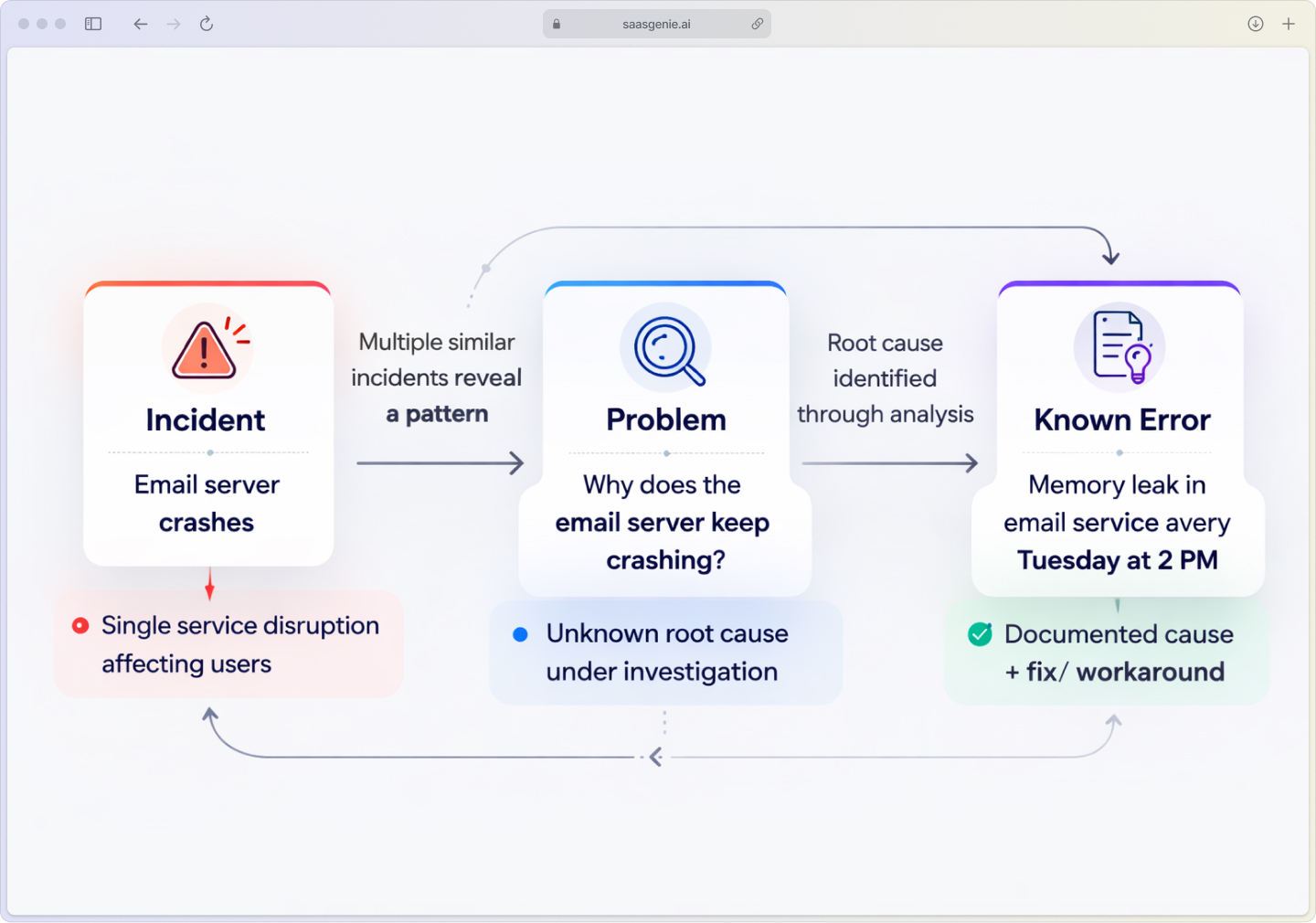
IT problem management is the process of finding and fixing the root causes of recurring IT incidents. In ITIL, a problem is the unknown cause behind one or more disruptions, while an incident is a single service interruption. Once the root cause is found and documented, it becomes a known error.
The goal is simple: stop the same issues from happening again and again. When your email server crashes every Tuesday, that's not bad luck; that's a problem waiting to be solved.
Think of it like being a detective. Incidents are the crime scenes, but problems are the actual criminals causing all the trouble.

You can clean up crime scenes all day, but until you catch the criminal, they'll keep happening.
Key distinctions:
- Problem: The unknown root cause behind one or more incidents.
- Incident: A single disruption to normal service.
- Known error: A problem with a documented root cause and workaround.
Why your IT team needs problem management
Problem management's north star is simple: cut incident volume and shrink its impact by eliminating root causes upfront.
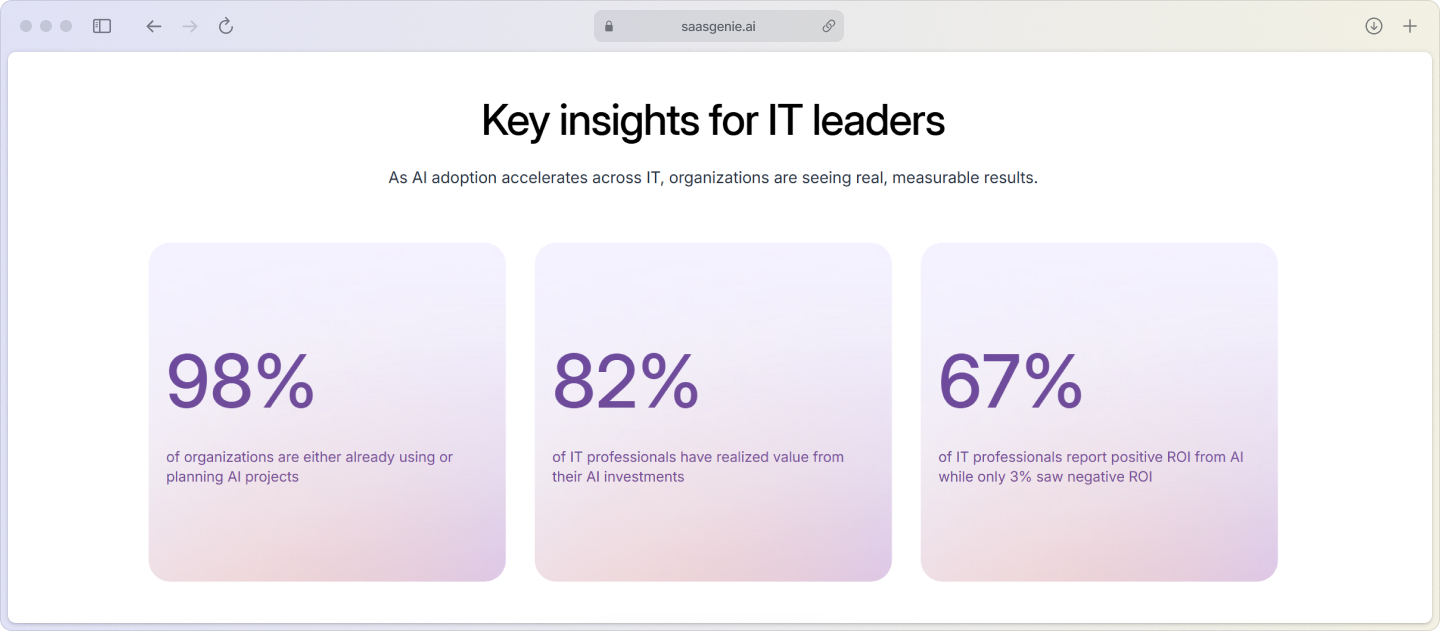
Without problem management, IT teams get stuck in what I call the "whack-a-mole" cycle. The same issues pop up repeatedly, 13% of incidents are repeats, eating time and energy that could go toward more strategic work.
Problem management helps break this cycle by focusing on patterns rather than individual tickets. When teams track recurring incidents and investigate their sources, they can eliminate entire categories of future disruptions.
The business impact shows up quickly: fewer emergency calls, less downtime (which costs enterprises $4,537 per minute), and happier users who aren't dealing with the same broken processes week after week.
Benefits include:
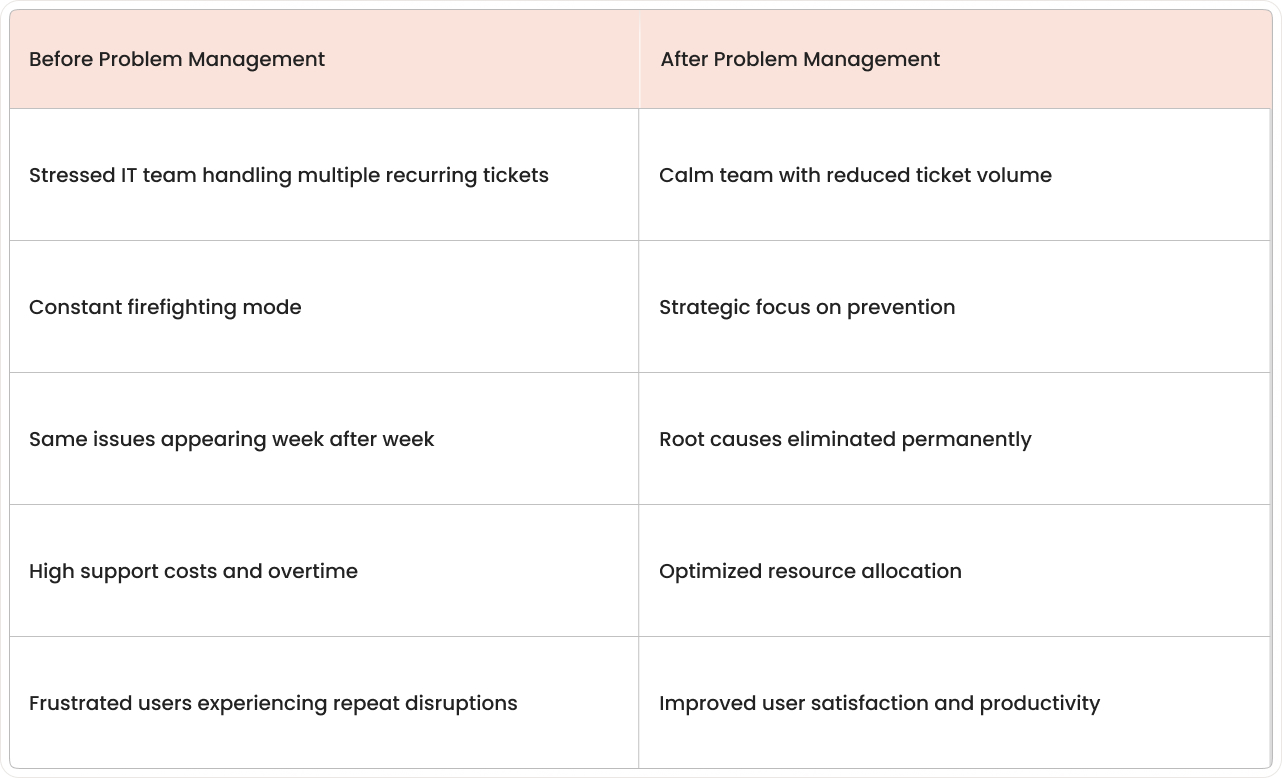
- Reduced incident volume: Fewer tickets mean more time for strategic projects.
- Lower stress: Teams spend less time firefighting the same issues.
- Better user experience: Employees face fewer recurring disruptions.
How the ITIL problem management process works
ITIL provides a structured approach to problem management that most organizations follow. The process breaks down into four main stages that work together to identify, investigate, and resolve underlying issues.

Problem identification
- Incident trend analysis
- Proactive system monitoring
- Direct user reports about recurring issues
Modern ITSM tools like Atomicwork use AI to automatically spot patterns in incident data. Instead of manually comparing tickets to find connections, the system groups related incidents and flags potential problems for investigation.
Problem control and root cause analysis
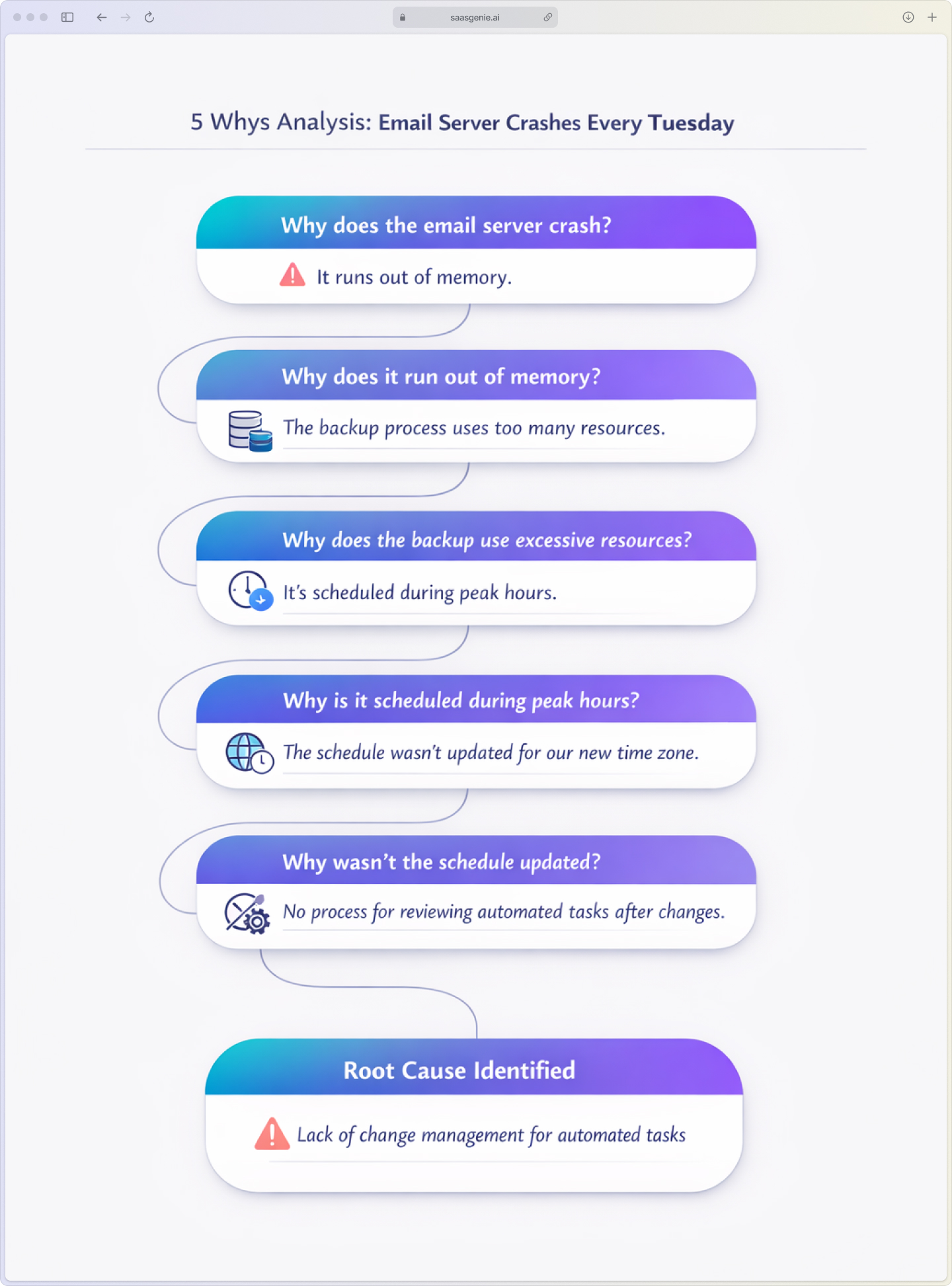
This investigation phase uses techniques like the "5 Whys" method. Asking "why" repeatedly drills down to the core issue. Teams gather evidence, test theories, and document their findings.
Root cause analysis can take time, but it's worth the investment. Finding the real source of a problem prevents countless future incidents and saves significant time in the long run.
Error control and resolution
Once teams identify the root cause, they create temporary workarounds to restore service while working on permanent fixes. These permanent solutions often require formal change management approval to ensure they don't create new problems.
Documentation becomes crucial here. Teams record what they learned, how they fixed it, and any ongoing monitoring needed to prevent recurrence.
Proactive problem management
The most advanced stage involves finding problems before they cause incidents. This requires analyzing historical data, monitoring system trends, and using predictive analytics to spot potential issues early.
Proactive problem management represents a shift from reactive firefighting to strategic prevention, 68% of organizations have become proactive responders, the difference between being an emergency responder and a system architect.
Incident management vs. problem management
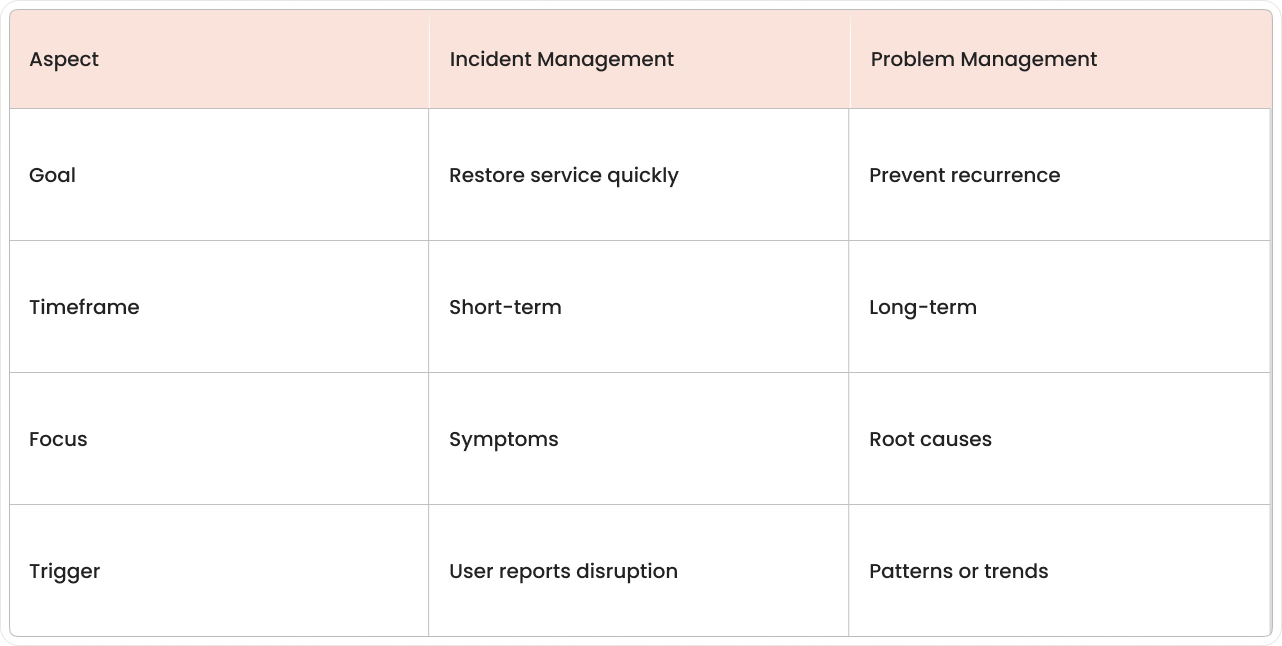
These processes work as partners, not competitors. Incident management handles the immediate crisis, getting systems back online and users working again. Problem management operates in the background, investigating why the crisis happened and how to prevent it next time.
Most IT teams excel at incident management but struggle with problem management. The urgent always crowds out the important, leaving root causes unaddressed and problems recurring indefinitely.
How AI transforms problem management
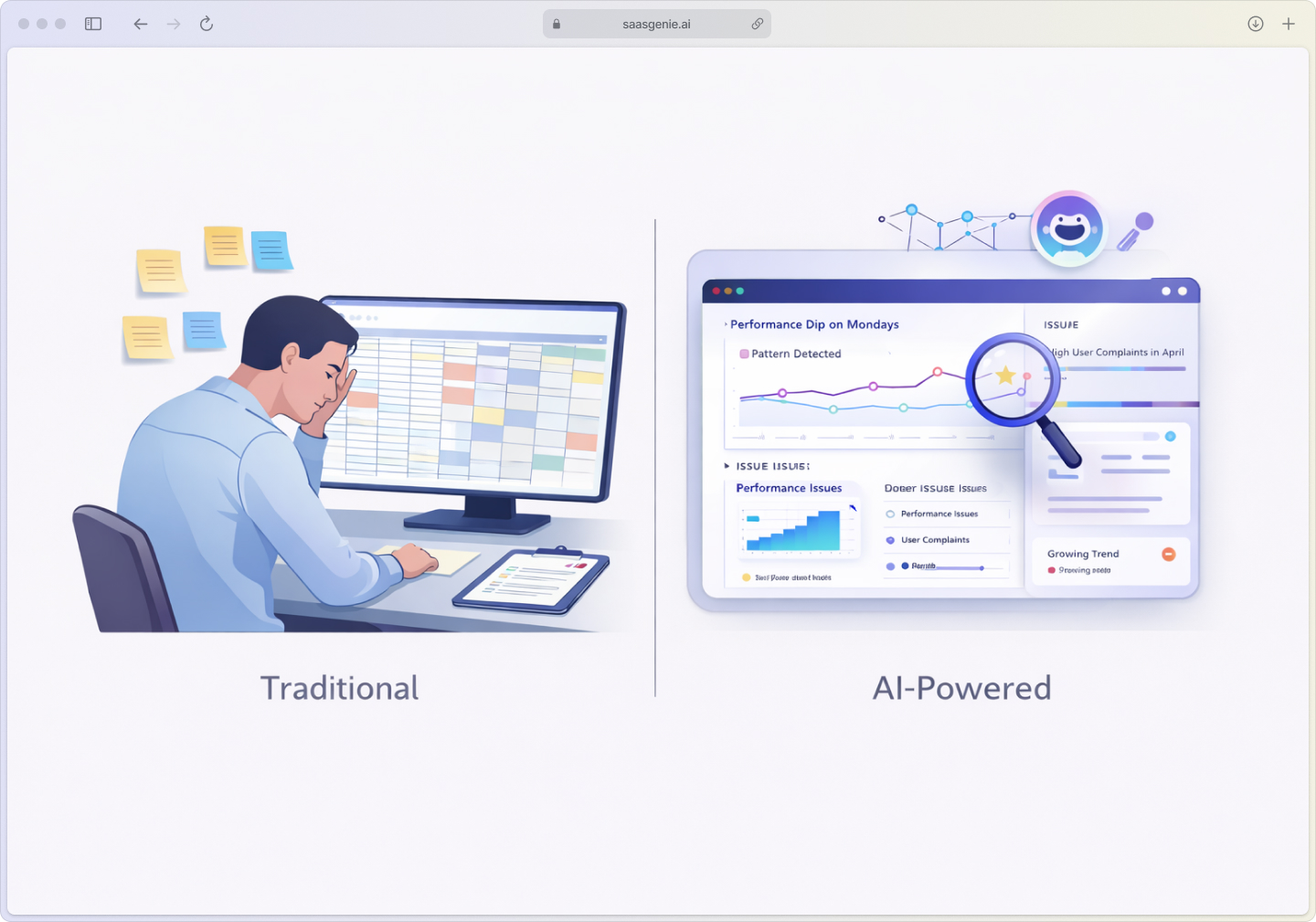
Traditional problem management relies on human pattern recognition and manual investigation, both time-consuming and limited by what people can reasonably track and remember, with developers spending 30% of their time on repetitive tasks. AI changes this dynamic by processing vast amounts of data and surfacing insights humans might miss.
AI flips the script by proactively scanning historical data, spotting patterns that hint at future incidents, and raising a flag before users feel a thing.
Automated root cause analysis
AI algorithms scan through thousands of incident records, system logs, and configuration data to identify connections. They group similar incidents, suggest probable causes, and highlight relevant historical cases, all in seconds rather than hours.
This automation doesn't replace human judgment but amplifies it. Teams get a head start on investigations with AI-generated hypotheses and supporting evidence.
Intelligent problem prioritization
AI weighs multiple factors simultaneously: business impact, incident frequency, affected user count, and resolution complexity. This multi-dimensional analysis helps teams focus on problems that deliver the biggest impact when solved.
The result is smarter resource allocation and faster time-to-value from problem management efforts.
AI-generated resolution suggestions
By comparing current problems to historical cases, AI recommends solutions that worked in similar situations. These suggestions include step-by-step procedures, relevant documentation, and success probability estimates.
Teams can try proven fixes first, reducing trial-and-error time and improving resolution success rates.
Predictive problem detection
AI continuously monitors system metrics, user behavior patterns, and environmental factors to identify early warning signs. When anomalies suggest developing problems, teams get alerts before users notice any impact.
This predictive capability enables true proactive problem management, addressing issues in their early stages when fixes are simpler and less disruptive.
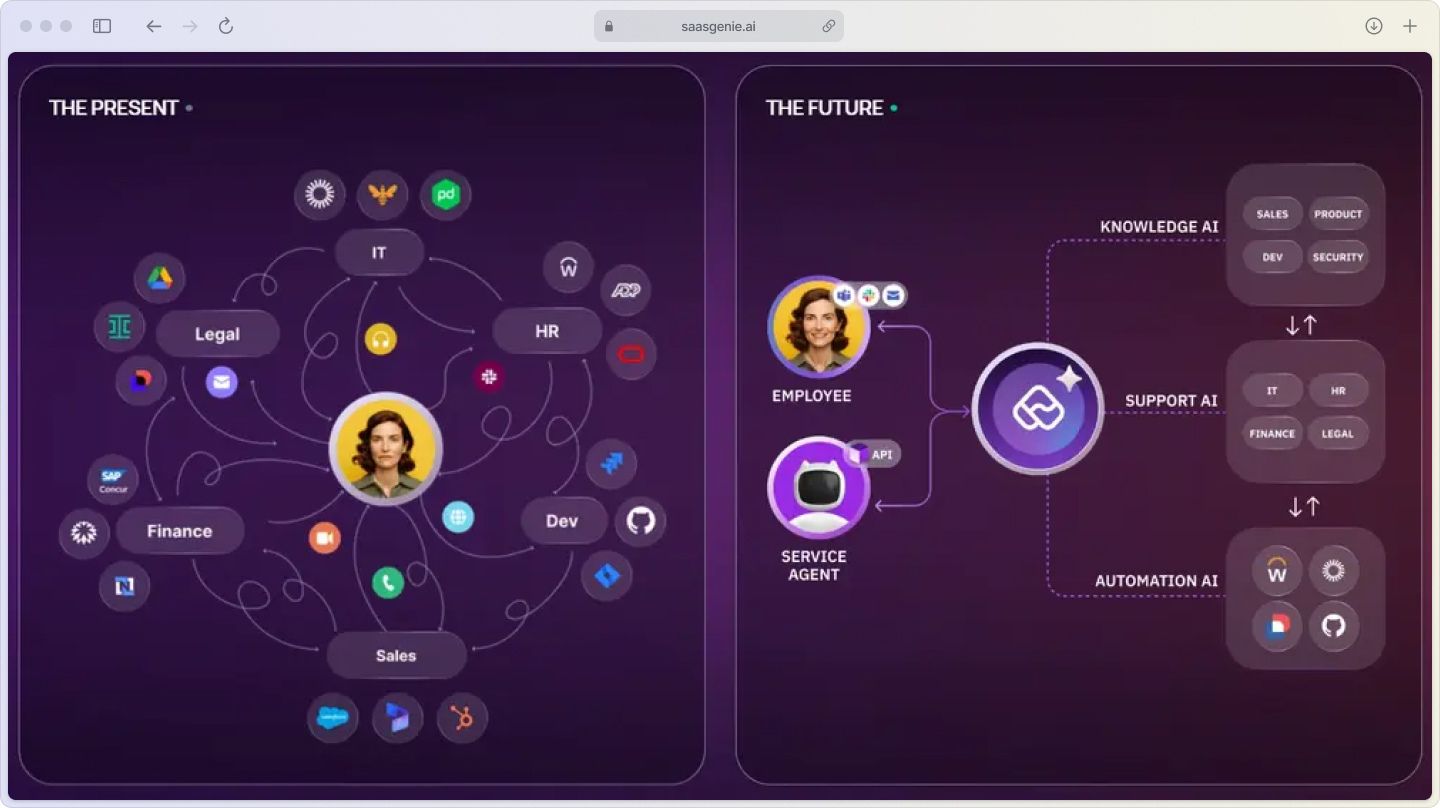
Atomicwork AI features to streamline problem management
Atomicwork takes an AI-first approach to problem management, automating routine tasks and providing intelligent insights throughout the process. The platform combines traditional ITIL workflows with modern AI capabilities.
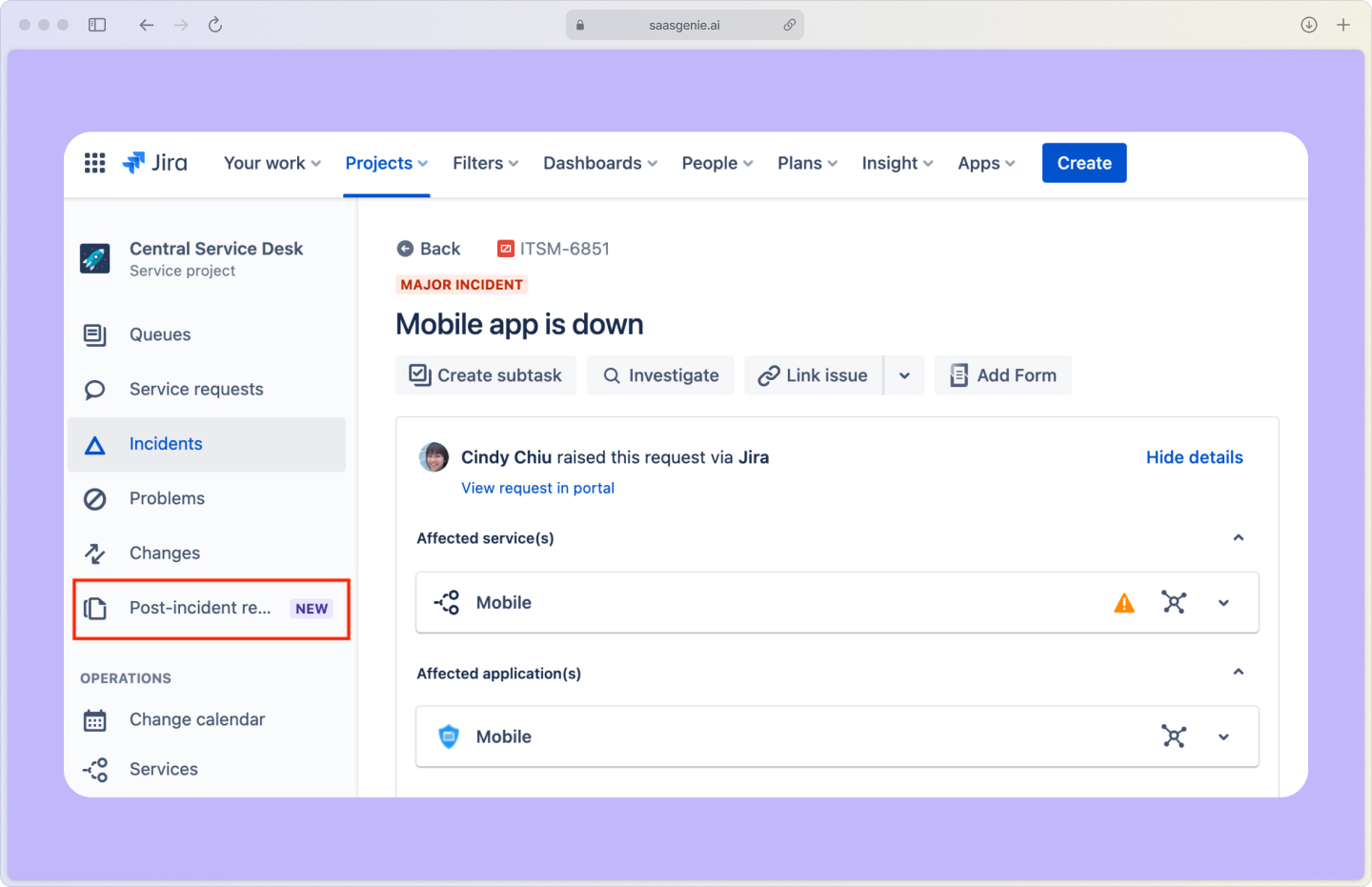
Problem identification made easy
Atomicwork automatically groups related incidents into problem records, eliminating manual correlation work. The AI analyzes ticket content, timing patterns, and affected systems to identify connections that might not be obvious.
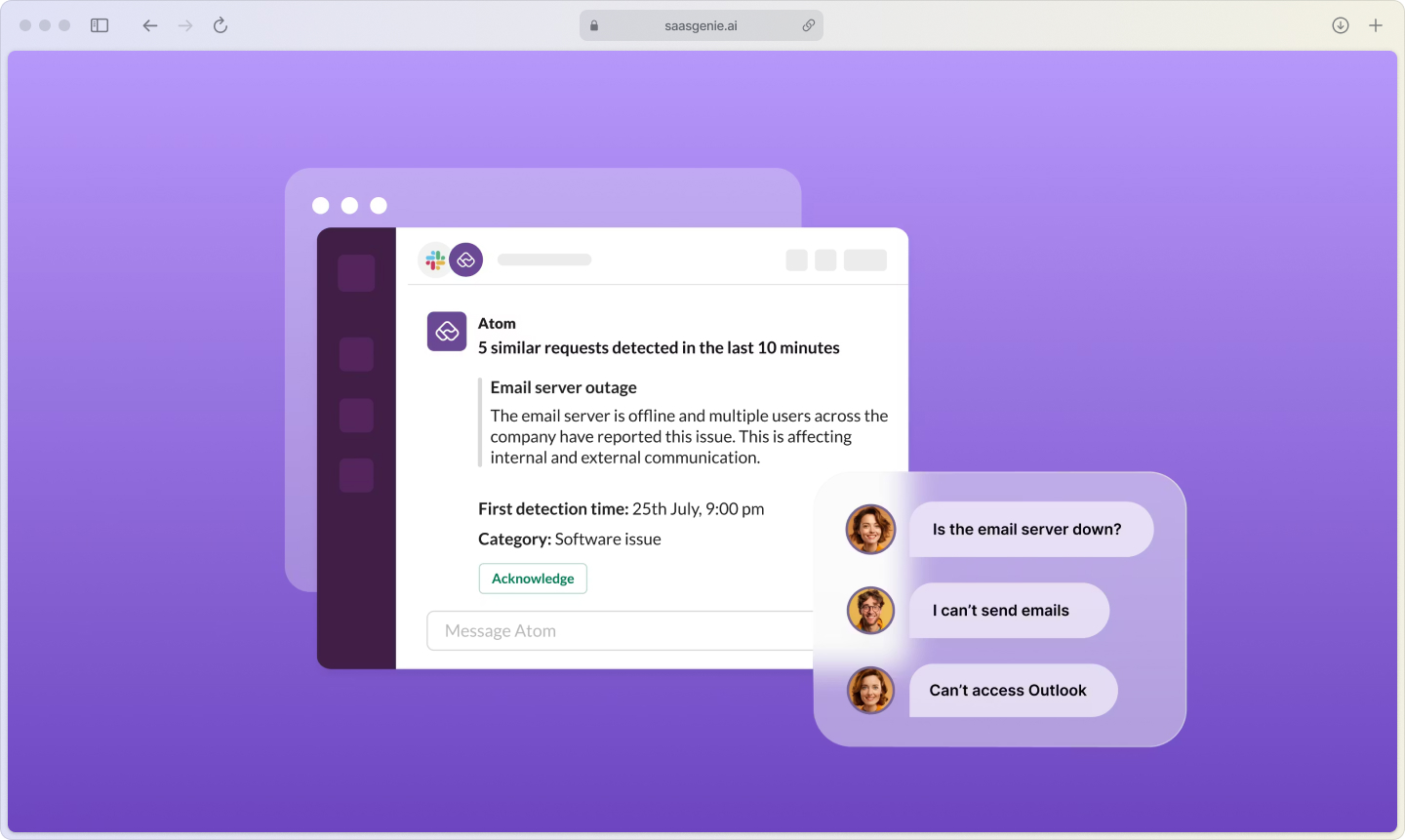
When five different users report "slow network" issues on the same day, Atomicwork recognizes this as a single problem requiring investigation rather than five separate incidents.
Auto-generated problem descriptions
Atom, Atomicwork's AI assistant, drafts comprehensive problem summaries based on linked incidents and system data. These descriptions include affected services, impact scope, and preliminary investigation notes.
Teams get well-documented problem records without spending time on administrative writing, allowing more focus on actual investigation and resolution work.
AI task generation with Atom
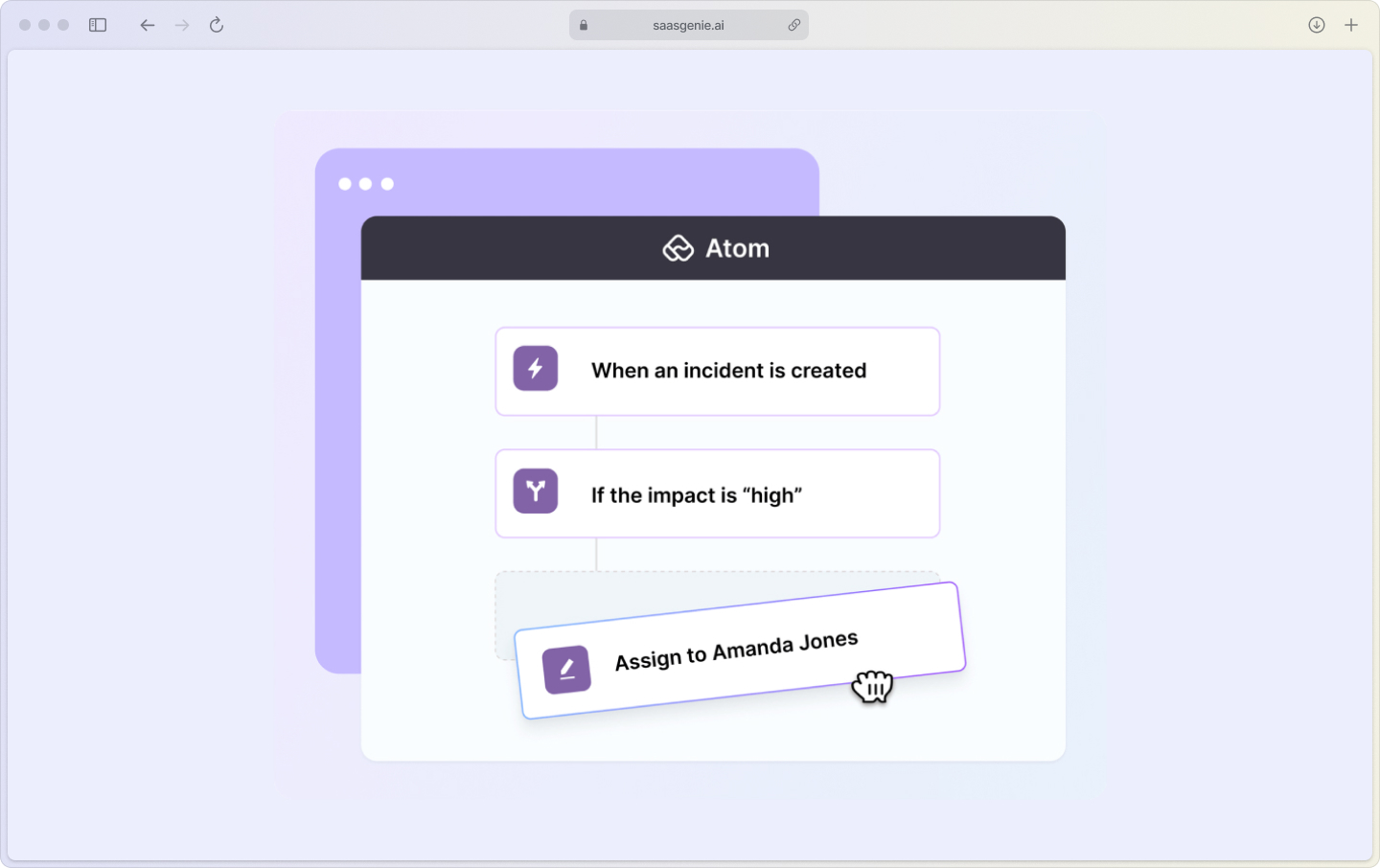
Atom creates investigation tasks automatically, assigning them to appropriate team members based on expertise and workload. Tasks include specific action items, relevant documentation links, and estimated completion times.
Atom also identifies and recommends the right incidents and root causes so you can focus on the fix!
This automation keeps problem investigations moving forward systematically, reducing delays and ensuring comprehensive coverage of all investigation angles.
Centralized problem documentation
Atomicwork maintains complete problem histories with linked incidents, investigation notes, resolution steps, and outcome tracking. All stakeholders can access the current status and contribute updates in real-time.
The centralized approach eliminates information silos and provides clear audit trails for compliance and continuous improvement purposes.
Change control integration
Problems connect directly to change requests within Atomicwork, ensuring permanent fixes go through proper approval workflows. This integration prevents rushed fixes that might create new problems.
Teams can track the complete lifecycle from problem identification through permanent resolution and post-implementation validation.
Broadcast fixes across your organization
Atomicwork enables communication of resolutions, workarounds, and status updates to all affected stakeholders directly from problem records. This keeps everyone informed without manual coordination overhead.
Move from reactive to proactive problem management
The transition from reactive to proactive problem management requires both mindset and process changes. Most teams start reactive, responding to problems after they cause incidents, and gradually build proactive capabilities.
Practical steps for the transition:
- Track incident patterns: Review tickets weekly to identify recurring themes
- Schedule investigation time: Block calendar time specifically for root cause analysis
- Use AI pattern detection: Let tools like Atomicwork surface trends automatically
- Measure prevention success: Track metrics like reduced incident recurrence
The key is starting small and building momentum. Even dedicating one hour per week to pattern analysis can reveal significant opportunities for proactive problem resolution.
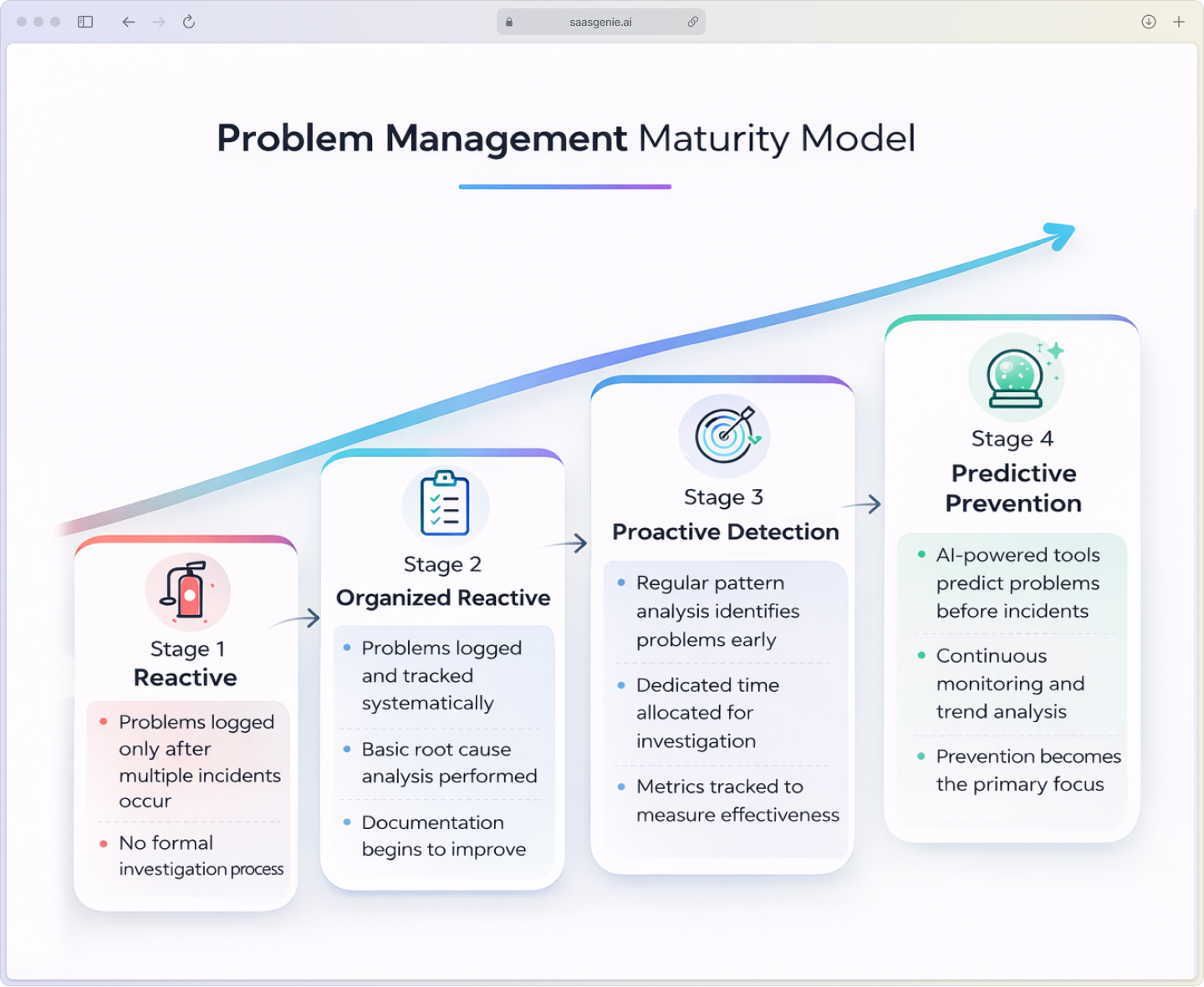
Problem management, reporting, and analytics with Atomicwork
Atomicwork provides comprehensive reporting capabilities that help teams measure problem management effectiveness and identify improvement opportunities. Dashboards display key metrics at a glance, while detailed reports support deeper analysis.
Available metrics include:
- Problem resolution times: Average and median time from identification to closure.
- Recurrence rates: Percentage of problems that generate additional incidents.
- Prevention effectiveness: Incidents avoided through proactive problem management.
- Team productivity: Problems resolved per analyst and resolution quality scores.
Trend analysis tools show patterns over time, helping teams understand whether their problem management maturity is improving and where additional focus might be needed.
Get started with Atomicwork problem management

saasgenie is a certified implementation partner for Atomicwork with deep expertise in ITSM deployments. We help organizations evaluate whether Atomicwork fits their requirements, provide personalized demonstrations, and manage complete implementations.
Our team understands both the technical and organizational aspects of successful problem management programs. We can help you design workflows, configure AI features, and train teams for maximum adoption and impact.

To Explore how Atomicwork might transform your problem management approach