.webp)



What is AI in Service Management, and Why It Matters?
AI in service management is the use of artificial intelligence technologies to automate, enhance, and optimize IT service management processes. This includes things like handling requests, solving technical problems, and keeping track of equipment or software.
Traditional IT service management (ITSM) relies on people to read requests, assign tickets, and follow set procedures. AI in service management uses technologies such as machine learning and natural language processing to help with these tasks. For example, an AI system in platforms like Freshservice or HaloITSM can read an email or chat, understand the question, suggest solutions, or send the request to the right person automatically.
Here's the reality.
Your IT team probably spent 20 minutes this morning walking someone through a password reset over email, back and forth, "try this," "still not working," "okay, now click here."

While three servers sat at 95% capacity, nobody noticed until users started complaining about slow apps.
AI in service management is your always-on assistant that handles the repetitive stuff automatically. Routing tickets, suggesting solutions, and resolving common requests while your team tackles problems that actually need human expertise.
Defining AI in service management
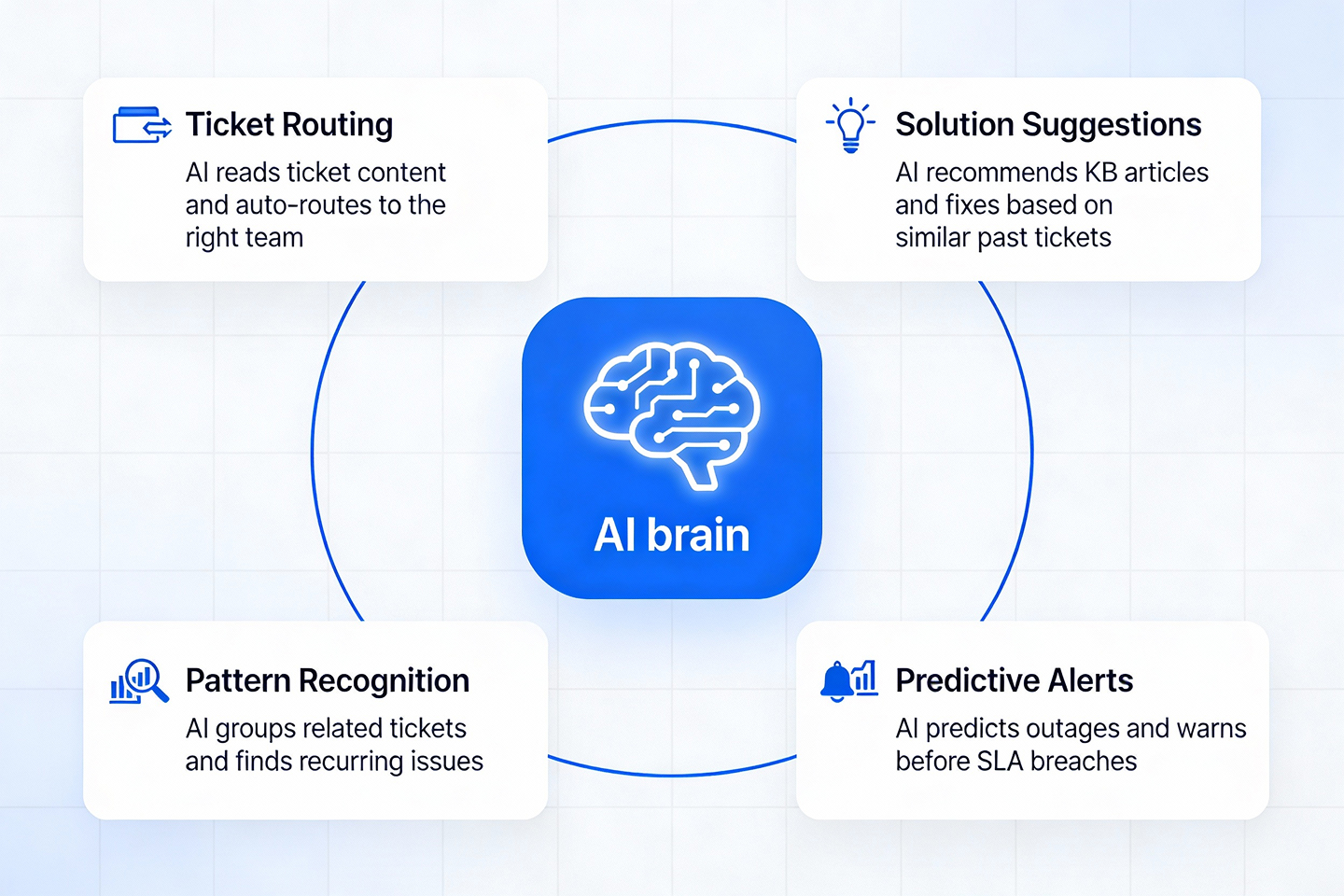
AI in service management (AISM) is artificial intelligence applied to IT service delivery. Think smart automation that reads tickets, routes requests, suggests fixes, and even predicts problems before they happen. In other words, it's the next evolution of ITSM. Your service desk's new nervous system that senses issues, thinks through options, and responds at machine speed to create better user experiences.
The key difference from traditional ITSM is learning capability. Standard help-desk tools simply follow pre-written rules. AI, on the other hand, studies patterns in past tickets and gets a little smarter with every interaction. A traditional system might route all "email" tickets to the same queue; AI in tools like Atomicwork or Jira Service Management learns that "email won't send" usually goes to network support, while "email signature" goes to desktop support.
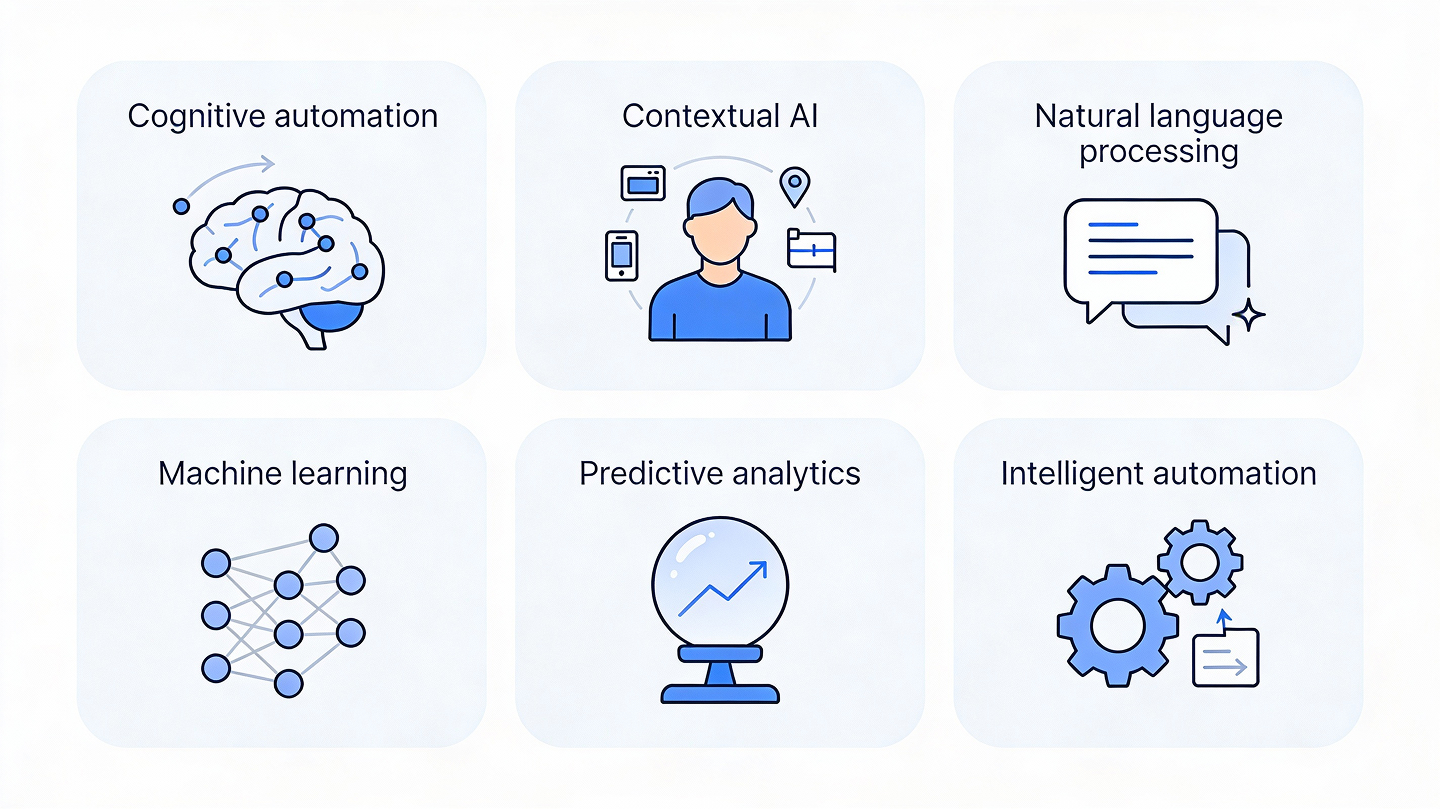
Core AI capabilities include:
- Cognitive automation: Handles multi-step decisions like change risk scoring without human input.
- Contextual AI: Personalizes answers by considering the requester's role, device, and history.
- Natural language processing: Reads tickets written in plain English and understands intent.
- Machine learning: Identifies patterns in historical data to improve decision-making.
- Predictive analytics: Forecasts potential issues based on trends and system behavior.
- Intelligent automation: Executes workflows based on conditions without manual triggers.
Why AI in service management matters now?
The shift from reactive IT firefighting to proactive service delivery is happening because manual processes can't keep up with modern demands. Organizations generate more tickets, users expect faster responses, and IT teams face pressure to do more with the same resources.
When you weave AI into your existing ITIL practices, whether you're running Freshservice, HaloITSM, Jira, or Atomicwork, it automates the busywork, speeds up delivery, and frees your team to tackle the high-impact projects that move the business forward.
Key drivers pushing AI adoption:
- Volume explosion: Average help desk ticket volume has increased by approximately 16% since the onset of the COVID-19 pandemic, reflecting a sustained rise in support demand as organizations digitize and remote work increases.
- Instant expectations: Employees want consumer-grade support experiences similar to Amazon or Netflix.
- Talent shortage: Skilled IT professionals are harder to find and more expensive to retain, with 90% of organizations expected to face IT skills crisis impacts by 2026 according to IDC.
- Data overload: Modern IT environments produce massive amounts of log data that humans can't analyze effectively.
A 2025 State of AI in ITSM survey found:
10% of organizations had extensive AI capabilities in production. 23% had limited AI capabilities in production, and another 24% were experimenting. This indicates 57% of organizations surveyed had some AI involvement, though not necessarily in full production scale.
Service desk challenges AI solves
Ticket Overload and Slow Resolution Times
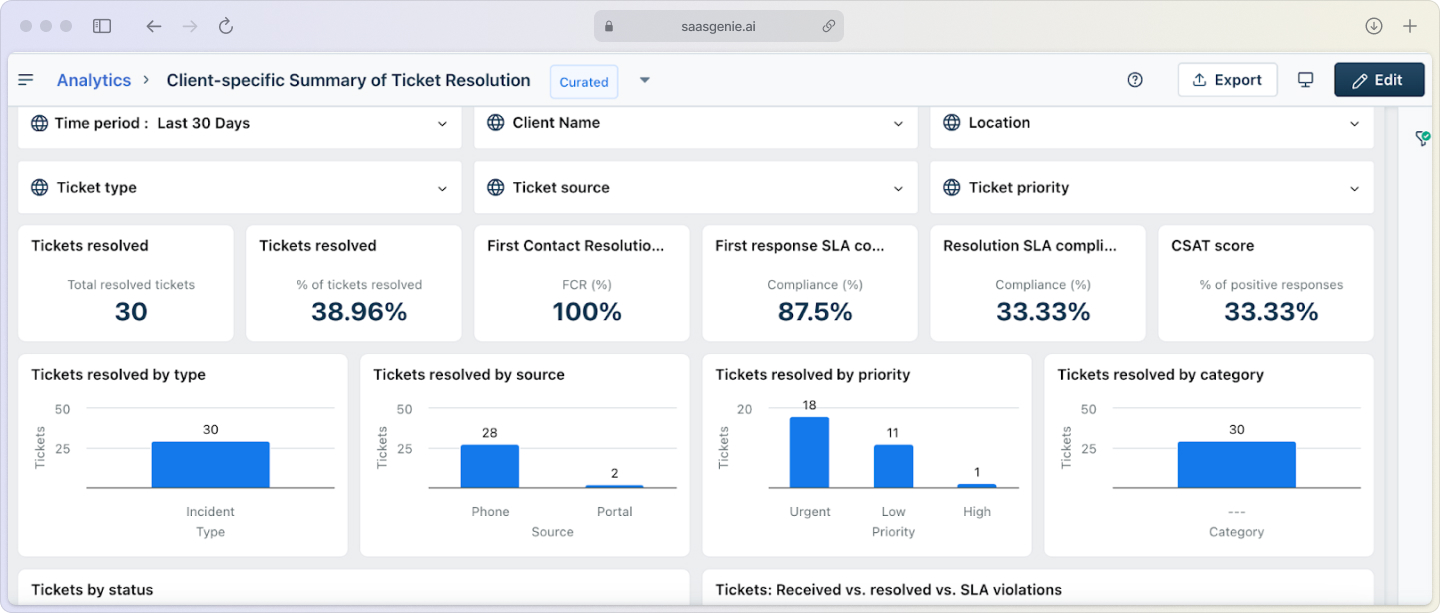
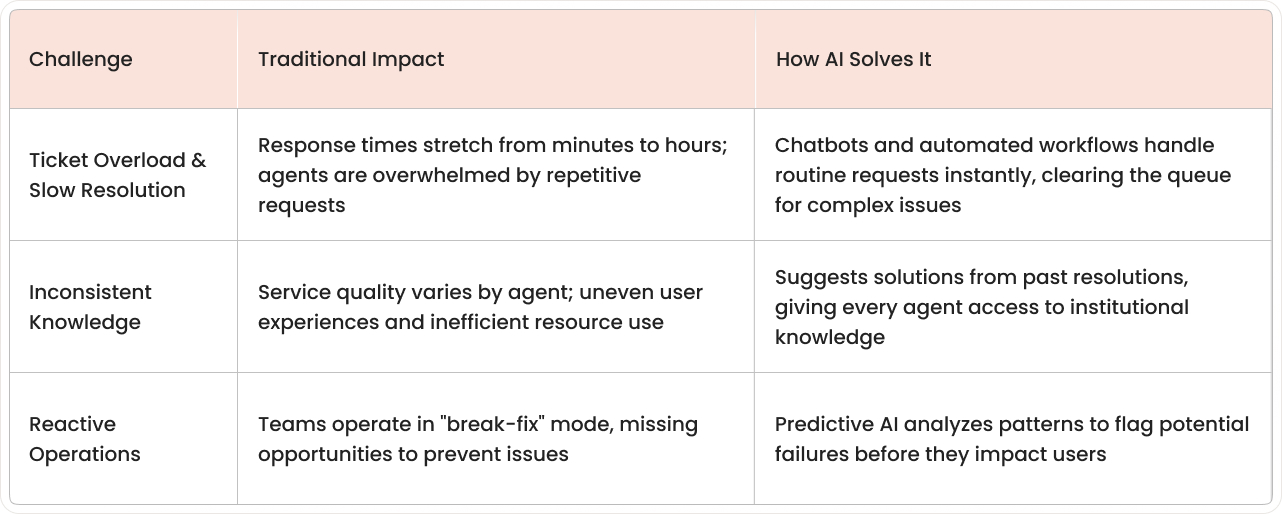
Most service desks drown in repetitive requests, password resets, software installations, and "how do I" questions that follow predictable patterns. When these pile up, response times stretch from minutes to hours, frustrating users and overwhelming agents.
AI handles routine requests instantly through chatbots and automated workflows in platforms like Freshservice, clearing the queue for complex issues that actually require human expertise.
Inconsistent Knowledge Across Your Team
Service quality often depends on which agent picks up your ticket. Senior staff might resolve issues in minutes while newer team members spend hours researching the same problem. This inconsistency creates uneven user experiences and inefficient resource utilization.
AI democratizes expertise by suggesting solutions from successful past resolutions, giving every agent access to institutional knowledge, whether you're using HaloITSM's knowledge base or Jira's resolution history.
Reactive Operations Instead of Proactive Insights
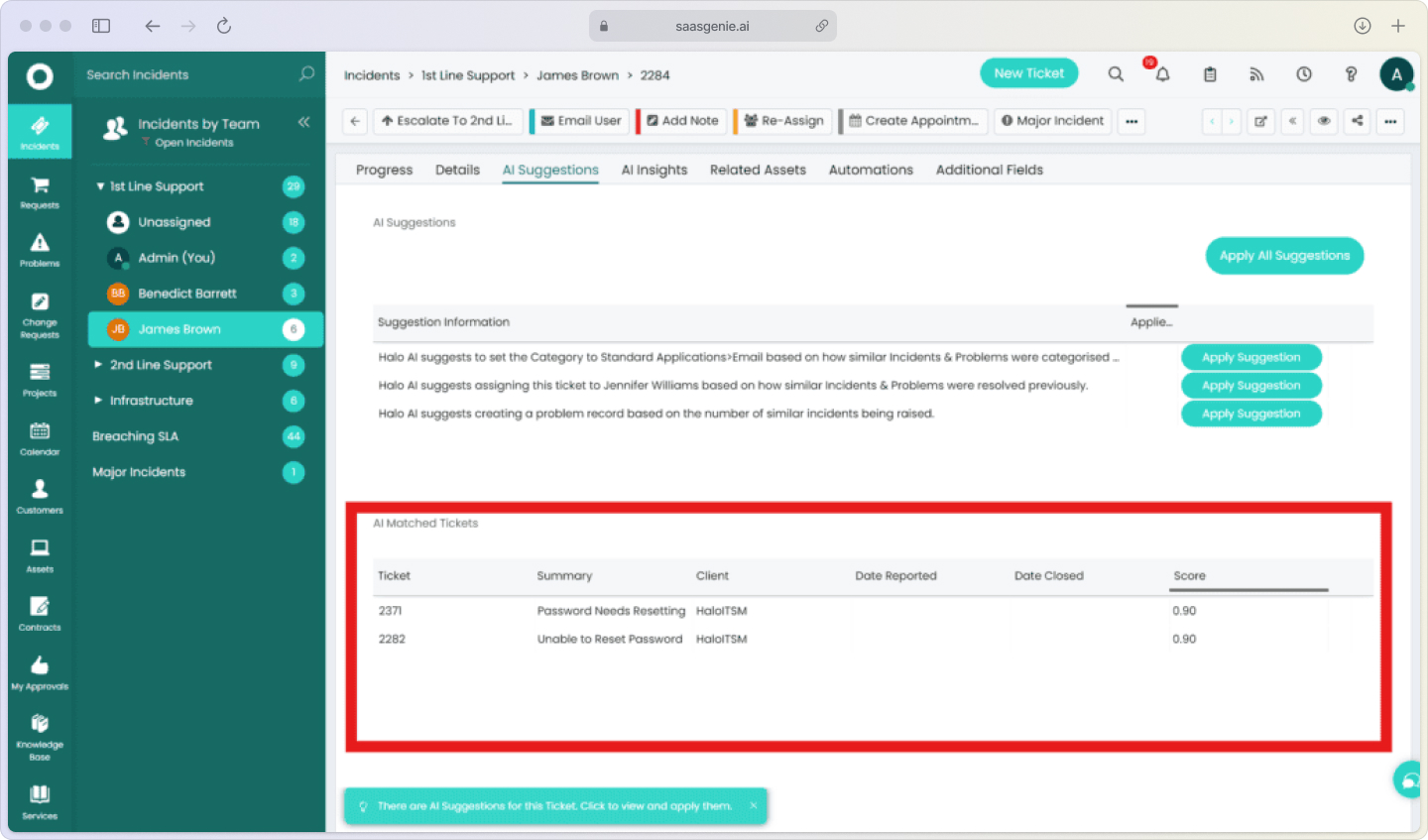
Traditional IT teams operate in "break-fix" mode, waiting for users to report problems, then scrambling to resolve them. This reactive approach misses opportunities to prevent issues or identify systemic problems affecting multiple users.
Predictive AI analyzes system patterns to flag potential failures before they impact users, shifting teams from reactive to proactive operations.
Types of AI Used in IT Service Management
Different AI technologies handle specific aspects of service management, from understanding user requests to predicting system failures.
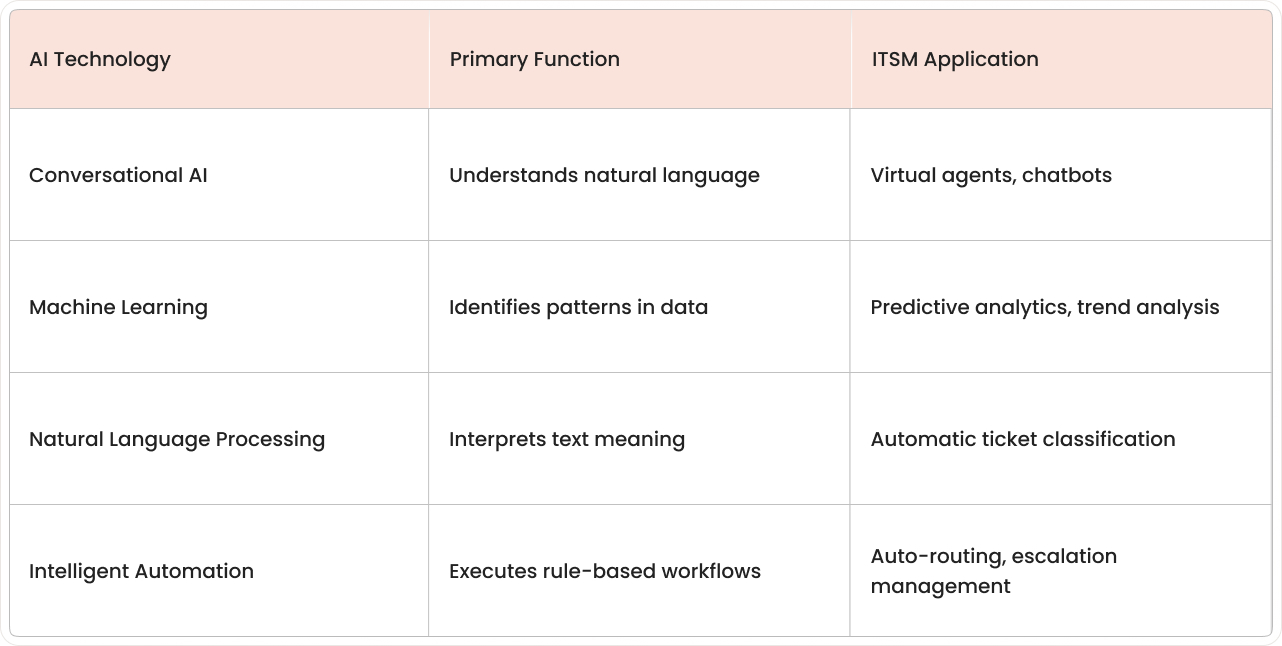
Conversational AI and Virtual Agents
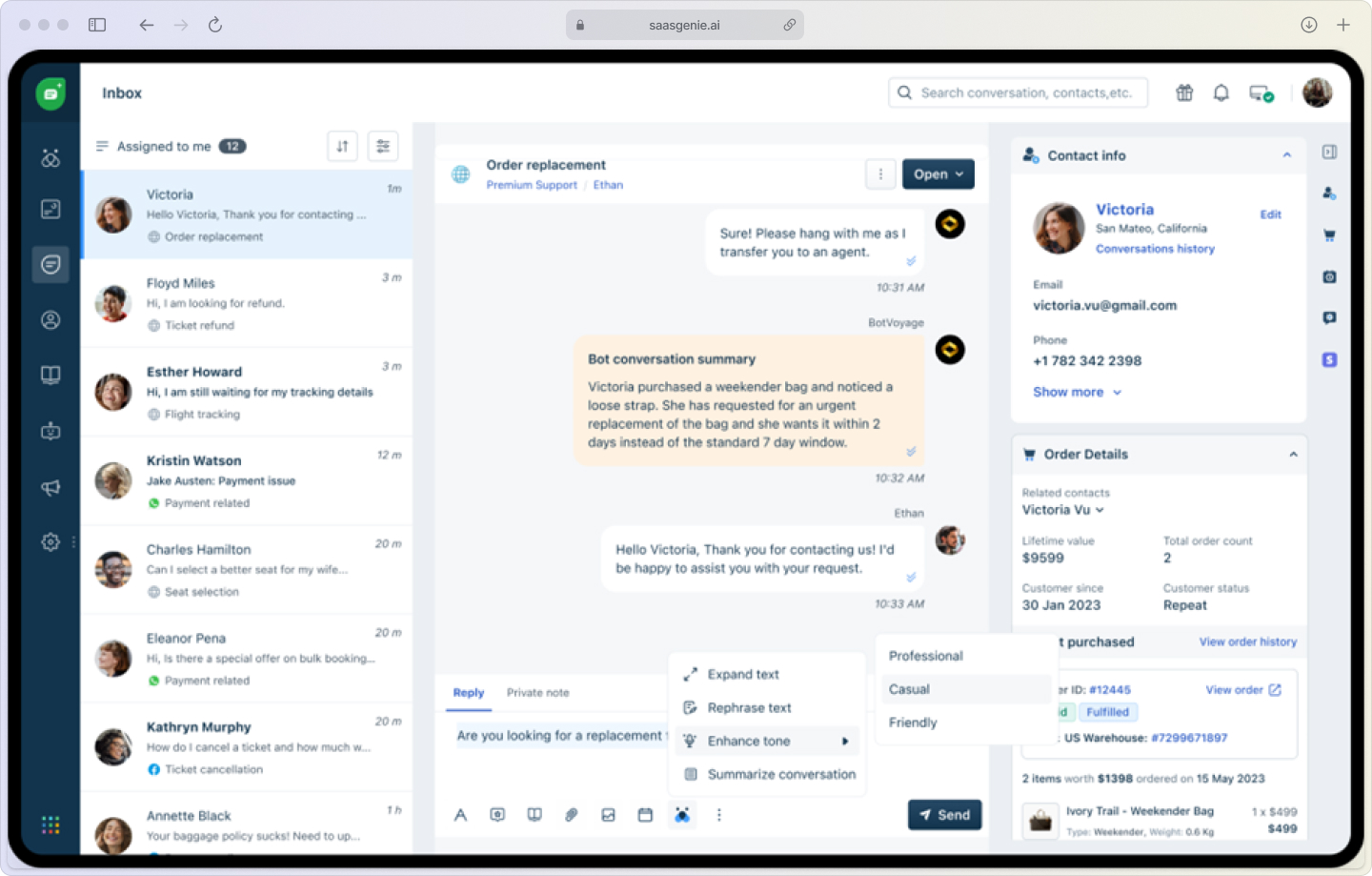
Virtual agents use conversational AI to handle common requests through chat interfaces. Users type questions in normal language, "I can't access the shared drive," and the system understands intent, asks clarifying questions, and either resolves the issue or creates a properly categorized ticket.
Modern virtual agents in Freshservice, & HaloITSM integrate with service catalogs and knowledge bases, enabling them to reset passwords, check request status, or guide users through troubleshooting steps without human intervention.
Machine Learning for Predictive Analytics
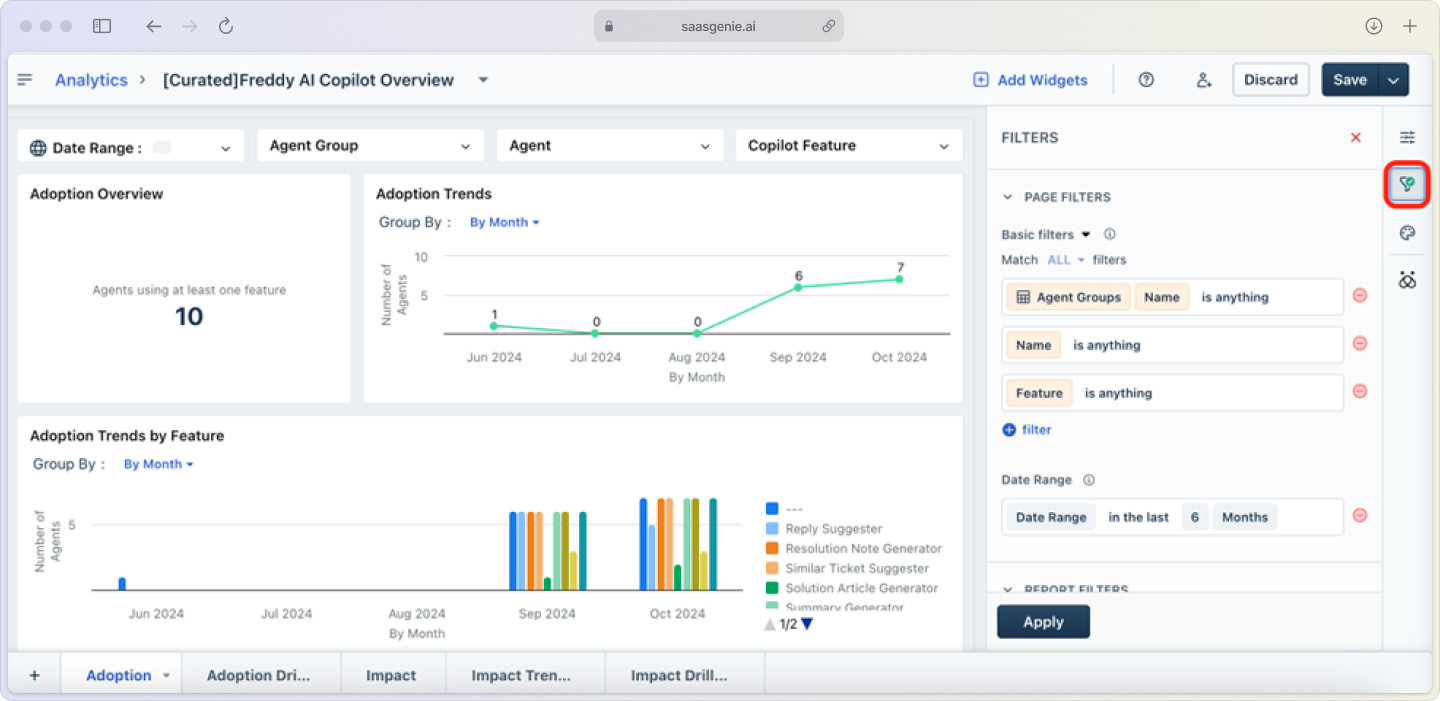
Machine learning algorithms analyze historical ticket data to identify patterns humans might miss. They can predict which types of incidents are likely to increase, suggest optimal staffing levels, or flag unusual activity that might indicate a larger problem.
For example, ML in platforms like Jira Service Management might notice that printer issues spike every Monday morning and recommend proactive maintenance schedules to prevent recurring incidents.
Natural Language Processing for Ticket Triage
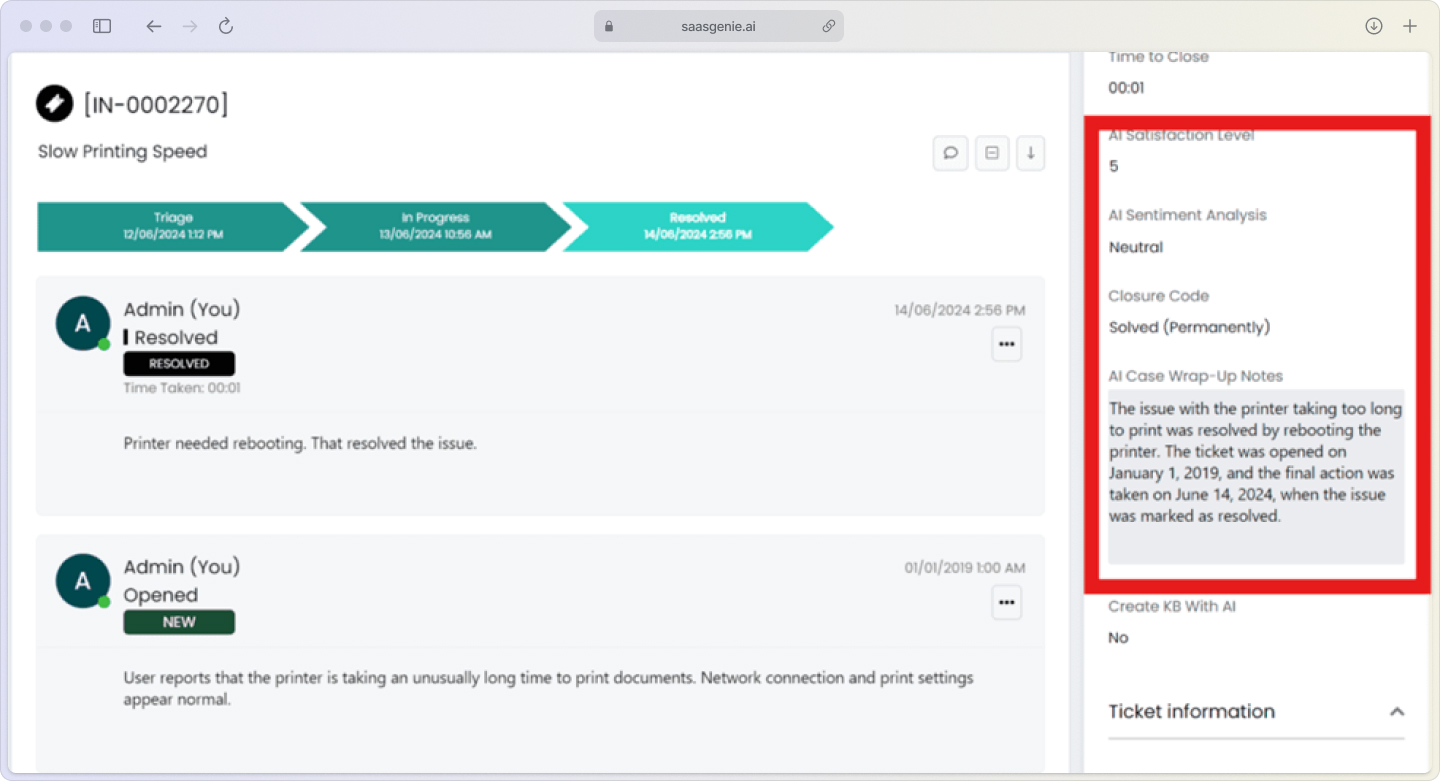
NLP reads incoming support requests and automatically categorizes them by topic, urgency, and required expertise. This eliminates the manual sorting step that often creates bottlenecks in traditional help desks.
Advanced NLP in tools like HaloITSM and Atomicwork can extract key information from rambling user descriptions, like specific error messages or affected applications, and populate ticket fields automatically.
How AI Transforms Core ITSM Processes
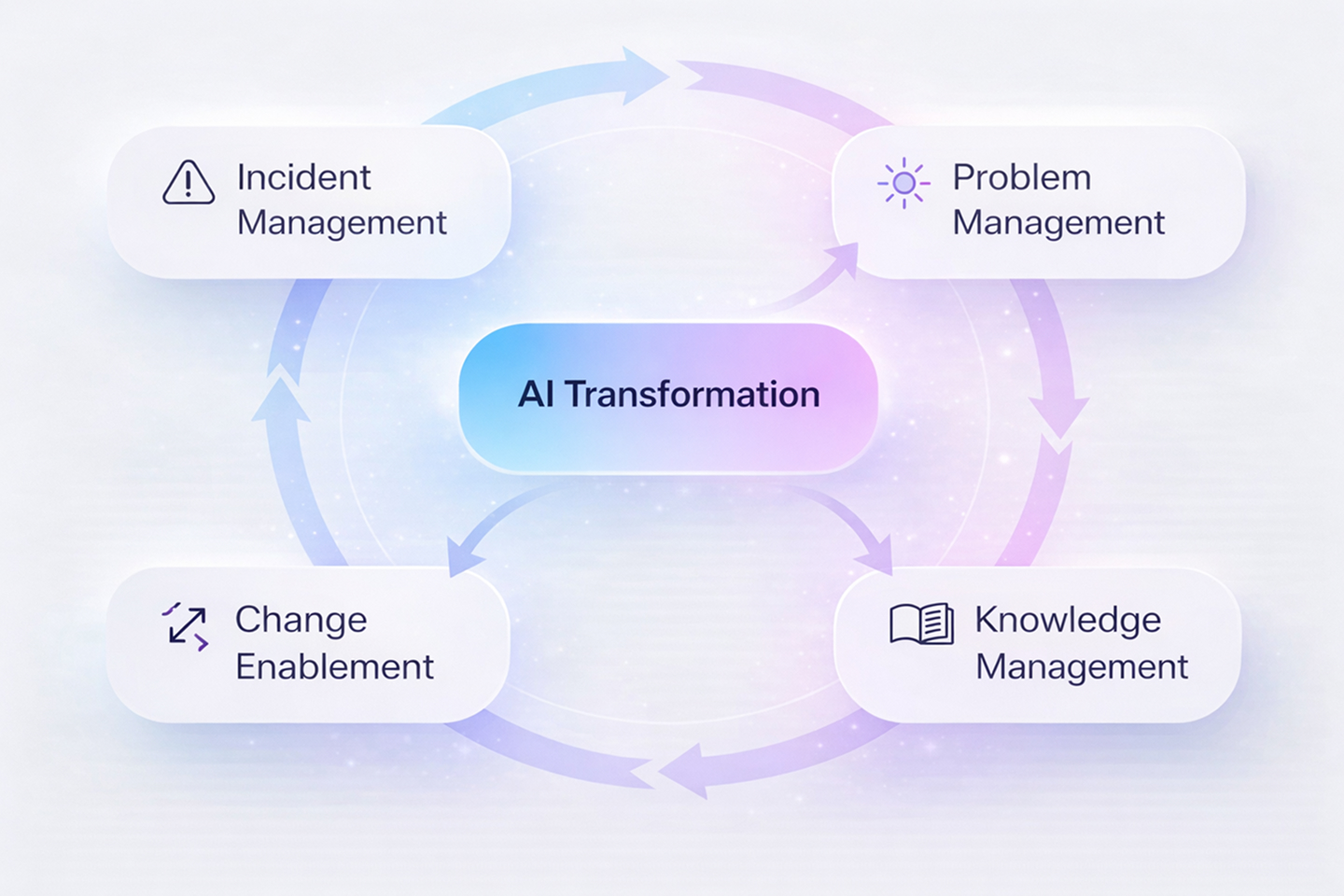
Incident Management
AI accelerates incident resolution through intelligent triage and solution suggestions. When tickets arrive, AI categorizes them, assigns priority levels, and routes them to appropriate teams based on content analysis rather than simple keyword matching.
During resolution, AI in Freshservice suggests potential fixes based on similar past incidents, reducing research time and improving first-contact resolution rates.
For a deeper dive into choosing the right tools, check out our guide to the best incident management software for enterprises.
Problem Management
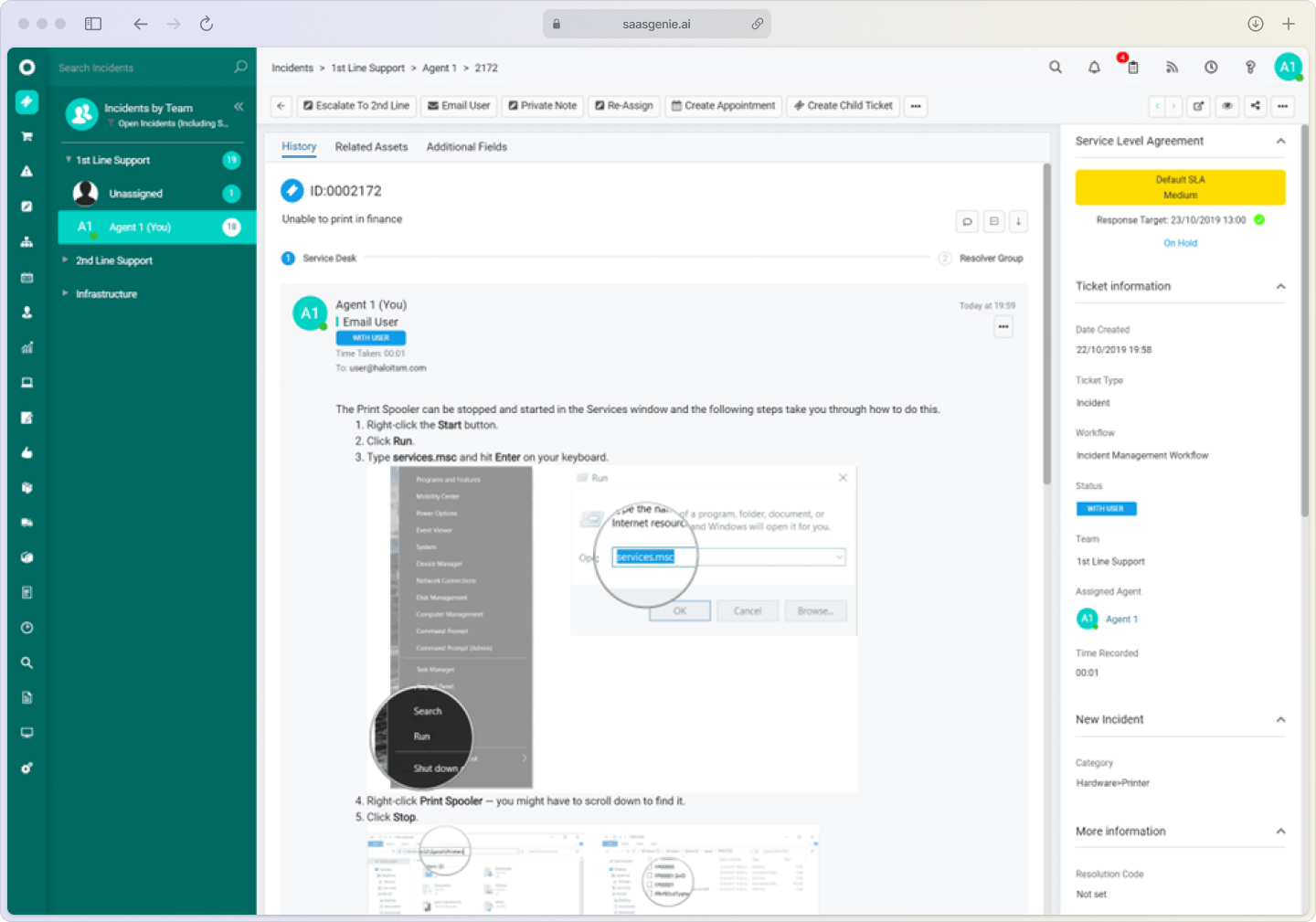
AI excels at finding patterns across large datasets that humans might overlook. It can identify recurring incident clusters, correlate seemingly unrelated issues, and highlight root causes that span multiple systems or timeframes.
This pattern recognition in platforms like HaloITSM helps teams shift focus from treating symptoms to addressing underlying problems that generate multiple incidents.
Change Enablement
AI assesses change requests by analyzing historical data about similar changes, configuration dependencies, and potential risk factors. It assigns risk scores and can automatically approve low-risk changes while flagging high-risk ones for human review.
This risk-based approach in tools like Jira and Freshservice speeds up routine changes while maintaining appropriate oversight for complex modifications.
Knowledge Management
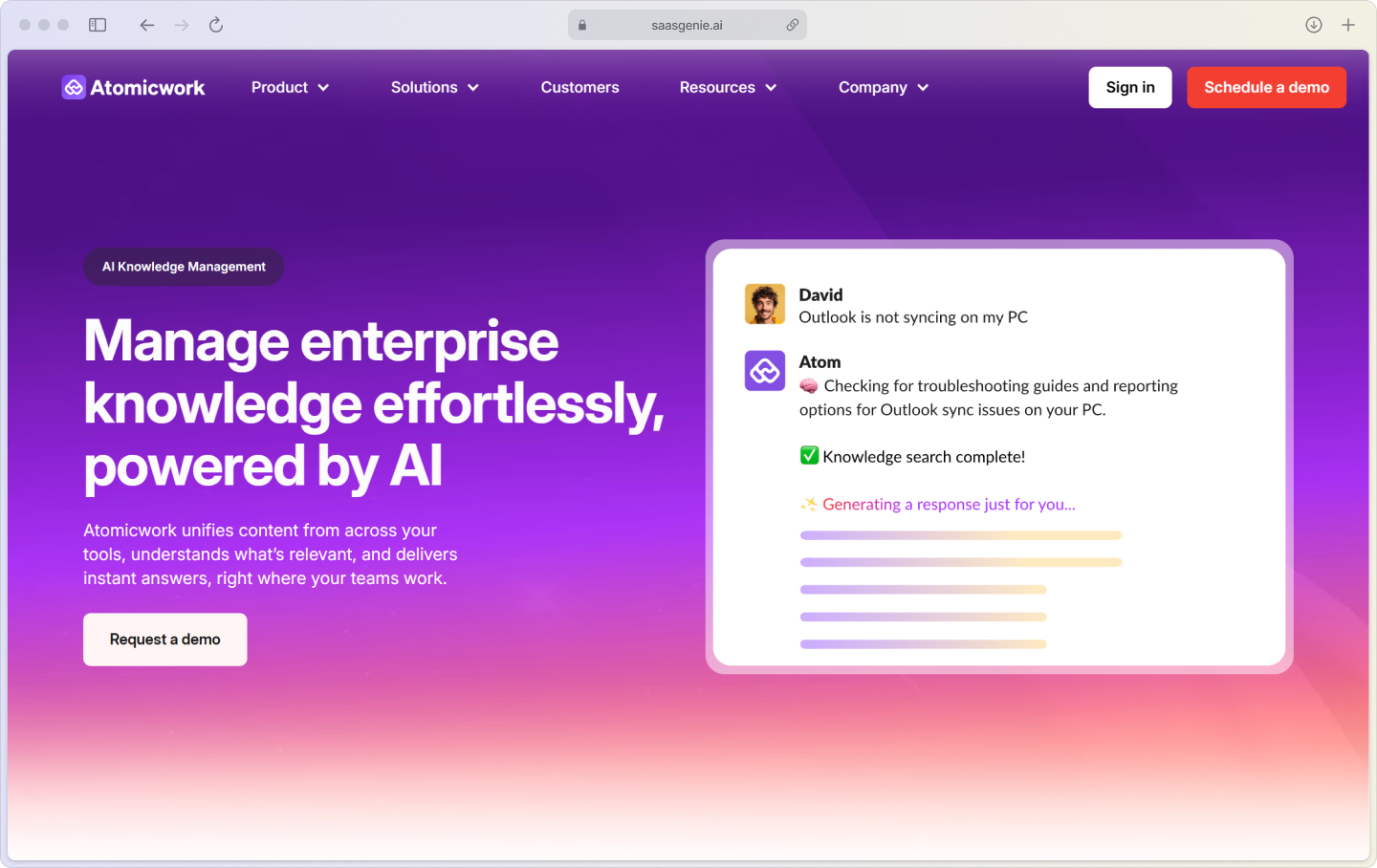
AI monitors ticket resolutions to identify knowledge gaps and suggest new articles for common issues. It also surfaces relevant existing articles to agents and users based on ticket content, improving self-service success rates and agent efficiency.
Smart knowledge systems in Atomicwork learn from user feedback to continuously improve article recommendations and identify outdated content.
Key Benefits of AI in Service Management
Faster Resolution Times and Stronger SLAs
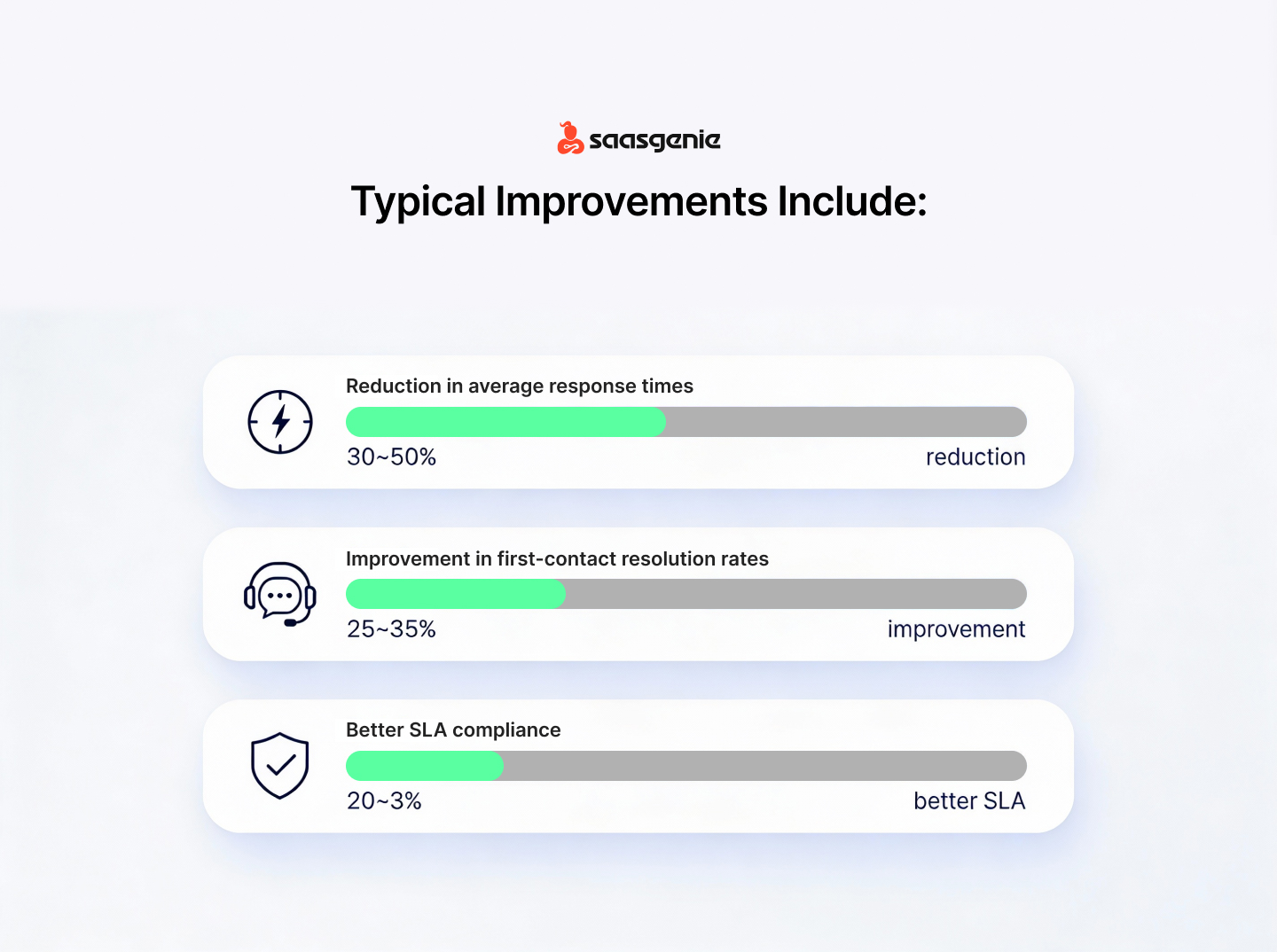
AI-powered automation handles routine requests instantly while intelligent routing ensures complex issues reach the right experts quickly. Solution suggestions help agents resolve unfamiliar problems faster by leveraging collective organizational knowledge, with top GenAI-using organizations achieving 54% faster resolution times according to recent ITSM research.
Lower Operational Costs
Automation reduces the manual effort required to process tickets, allowing teams to handle higher volumes without proportional staff increases. Virtual agents can manage simple requests 24/7 without overtime costs or staffing constraints.
Organizations typically see cost-per-ticket reductions of 30-50% for automated request types while maintaining or improving service quality.
Better Employee and End-User Experience
AI enables consistent service delivery regardless of when requests arrive or which agent responds. Users receive immediate acknowledgment, regular status updates, and faster resolutions through multiple channels.
Self-service capabilities powered by AI in platforms like HaloITSM and Jira allow users to solve problems independently when convenient, reducing dependency on help desk hours and improving overall satisfaction.
Scalable Service Delivery
AI systems handle volume spikes without degradation, making it easier to support business growth, seasonal demands, or unexpected events like system outages that generate ticket floods.
This scalability protects service levels during peak periods while avoiding the costs of over-staffing for occasional volume surges.
As of 2025, 78% of global companies report using AI in some capacity in their business operations, and 90% are either using or exploring AI adoption.
AI Features to Look for in ITSM Platforms
Not all AI is created equal. Some platforms slap "AI-powered" on basic automation and call it a day. Others bake intelligence into every layer, ticket triage, self-service, predictive insights, and beyond.
Here's what actually matters when you're evaluating ITSM tools with real AI muscle. Want to see proactive AI in action? Watch our Freshservice ITSM webinar to learn how leading teams are deploying intelligent service management.
Native Virtual Agent Capabilities
Look for platforms with built-in conversational AI that integrates directly with your service catalog and knowledge base. Native integration in tools like Freshservice and Atomicwork ensures virtual agents can access current information and complete actual work, not just provide scripted responses.
Effective virtual agents handle multi-turn conversations, maintain context across interactions, and escalate smoothly to human agents when needed.
Intelligent Ticket Classification and Routing
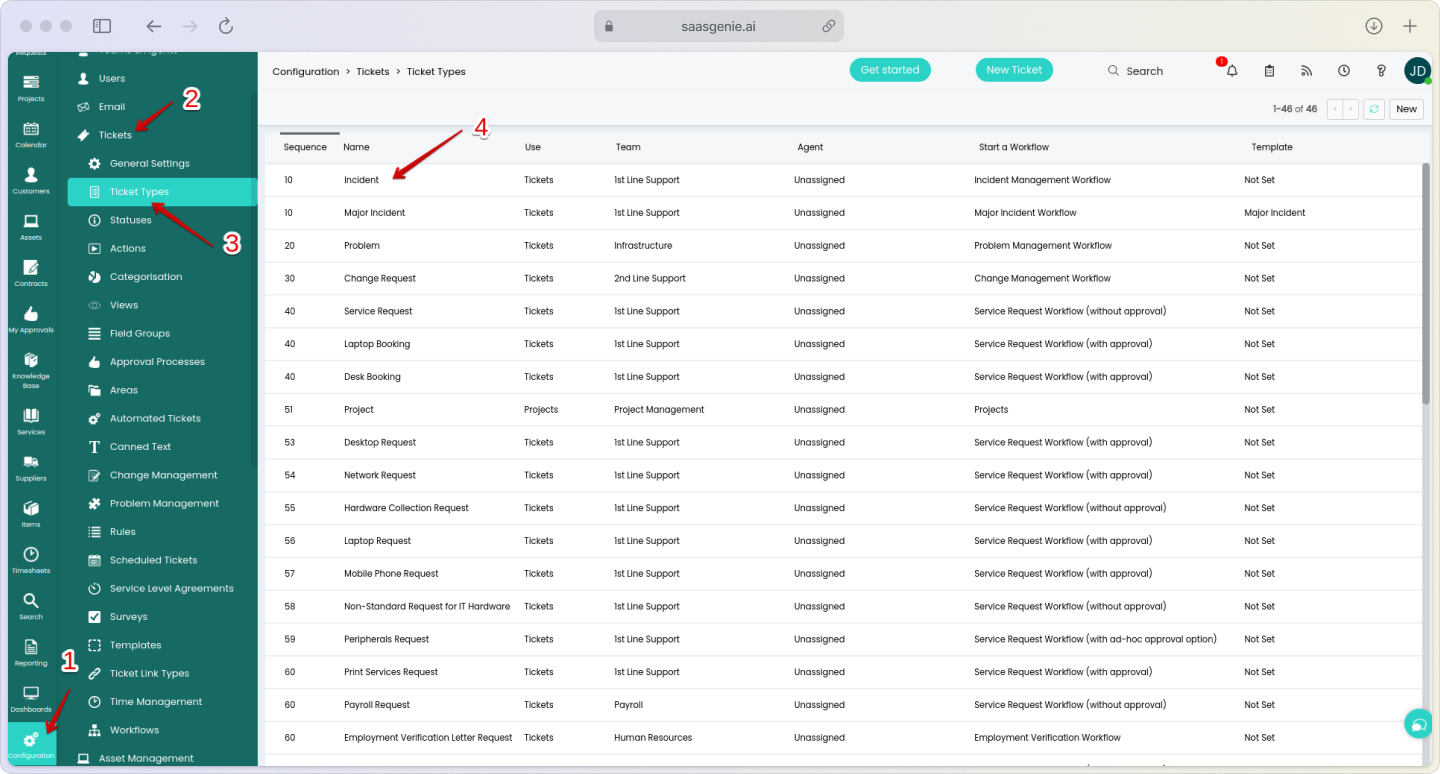
Evaluate how accurately the platform categorizes and routes tickets based on content analysis rather than simple keyword rules. Advanced systems in HaloITSM consider context, urgency indicators, and workload distribution when making routing decisions.
The best platforms learn from agent corrections to improve classification accuracy over time.
AI-powered self-service portals
Modern self-service portals use AI for smart search, personalized content recommendations, and guided troubleshooting workflows. Users should find relevant information quickly without navigating complex category structures.
Look for portals in Freshservice that adapt to user behavior and success patterns to continuously improve the self-service experience.
Predictive Analytics Dashboards
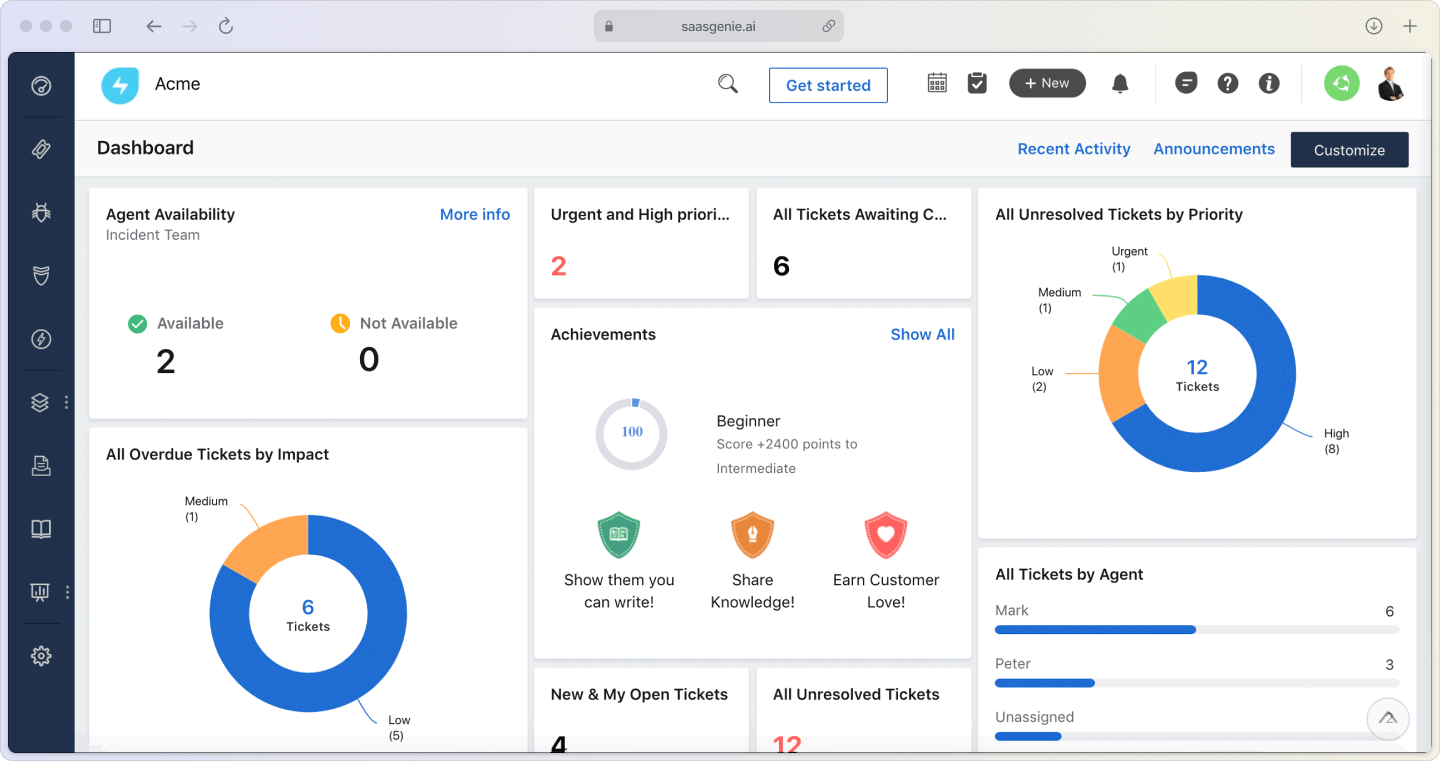
AI-driven dashboards surface trends, capacity bottlenecks, and brewing issues before they blow up into service outages. Instead of drowning in raw metrics, you get visual insights that actually tell you what to do next. Like "printer incidents are climbing 15% week-over-week" or "your storage will hit capacity in 23 days."
The best dashboards in platforms like HaloITSM highlight actionable intelligence rather than overwhelming managers with vanity metrics. Look for platforms that let you drill down from high-level trends into specific ticket clusters, so you can spot patterns and adjust resources before users start complaining.
AI Governance & Security Controls
Modern AI needs guardrails, model transparency, role-based access, and opt-in data usage. This is so you stay compliant while still innovating.
AI-driven dashboards provide insights into trends, capacity planning, and potential issues before they impact service delivery. Visual displays make complex data accessible to managers and executives who need operational insights.
Effective dashboards highlight actionable insights rather than overwhelming users with raw metrics.
What to Consider Before Implementing AI in ITSM
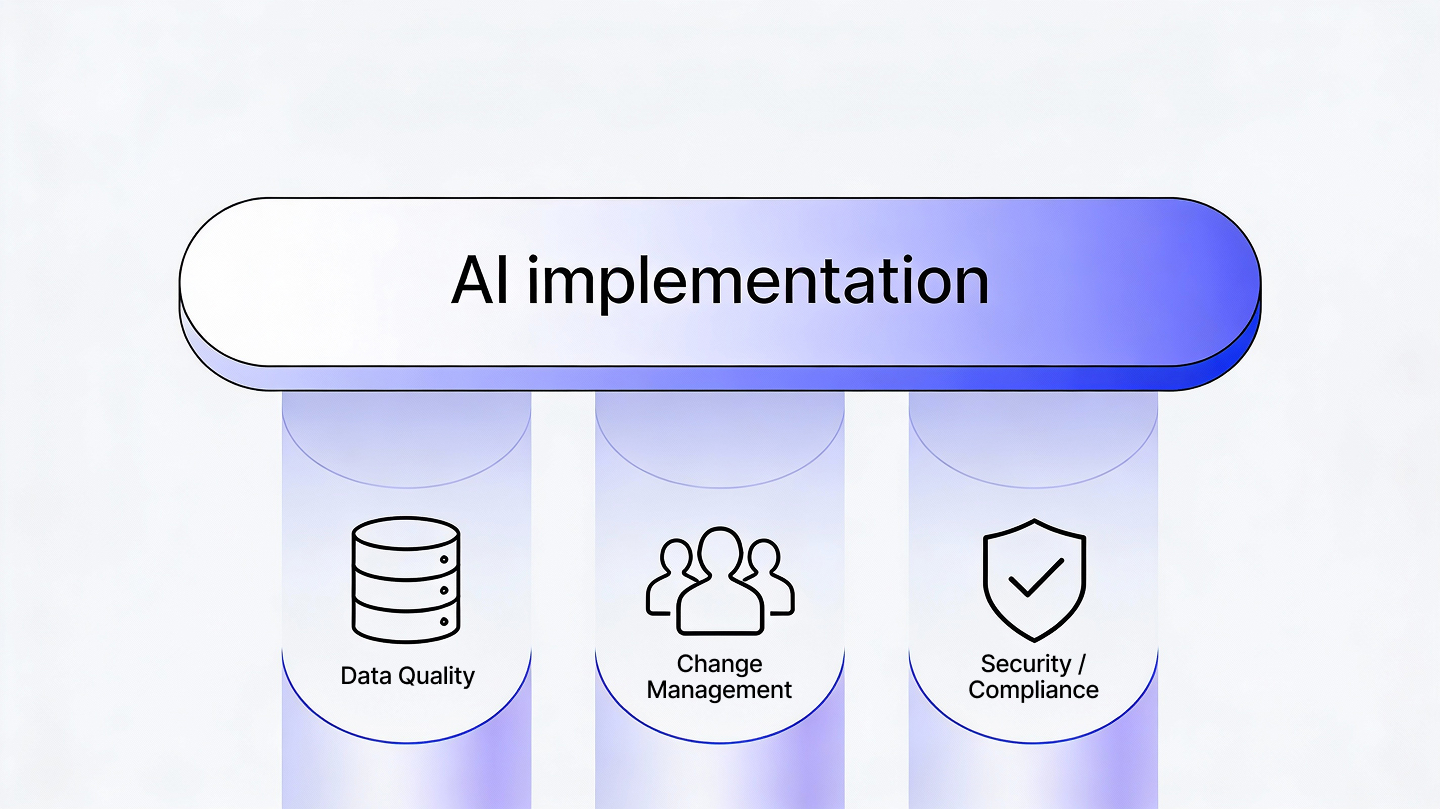
Data Quality and Infrastructure Readiness
AI systems learn from historical data, so data quality directly impacts AI effectiveness. Review your current ticket data for consistency, completeness, and accuracy before implementing AI features in Freshservice, HaloITSM, Jira, or Atomicwork.
Data preparation considerations:
- Clean categorization: Consistent ticket categories improve AI training.
- Complete resolution notes: Detailed closure information helps AI suggest better solutions.
- Standardized processes: Uniform workflows provide better pattern recognition opportunities.
Change Management and Team Adoption
AI changes how agents work by automating routine tasks and providing decision support. Prepare your team for new workflows where they collaborate with AI tools rather than working entirely manually.
Focus on explaining how AI enhances agent capabilities rather than replacing human judgment, addressing concerns about job security or skill relevance.
Security, Compliance, and Governance
AI systems process sensitive organizational and user data, requiring careful attention to privacy, access controls, and regulatory compliance. Verify that AI features in your chosen platform meet your industry's specific requirements.
Consider data residency, audit trail capabilities, and the ability to explain AI decisions when compliance frameworks require transparency.

Looking for alternatives to legacy systems like ServiceNow?
Check out our comprehensive guide to the best ITSM ServiceNow alternatives to find the right platform for your needs.
How to Get Started with AI in Service Management

1. Assess Your Current ITSM Maturity
Evaluate existing processes, data quality, and team capabilities before adding AI complexity. AI works best when applied to well-defined, consistent processes with clean historical data.
Document current pain points, volume patterns, and success metrics to establish baselines for measuring AI impact.
2. Identify High-Impact AI Use Cases
Start with repetitive, high-volume tasks that follow predictable patterns. Password resets, software requests, and common troubleshooting scenarios typically offer quick wins with measurable benefits.
Avoid complex, exception-heavy processes for initial AI implementations. Save those for later phases when your team has more AI experience.
3. Evaluate AI-Capable ITSM Platforms
Compare platforms like Freshservice, HaloITSM, Jira, and Atomicwork based on AI maturity, integration capabilities, and alignment with your specific use cases. Consider factors like implementation complexity, ongoing maintenance requirements, and vendor support for AI features.
Key evaluation criteria:
- AI feature depth: Built-in capabilities vs. third-party add-ons.
- Integration options: Compatibility with existing tools and data sources.
- Customization flexibility: Ability to adapt AI behavior to your specific needs.
- Performance transparency: Visibility into AI decision-making and accuracy metrics.
4. Build Your Implementation Roadmap
Plan a phased approach starting with low-risk, high-value use cases before expanding to more complex scenarios. Set clear success metrics and timelines for each phase.
Include training, change management, and optimization activities in your roadmap. AI implementation is an ongoing process, not a one-time project.
5. Measure Results and Optimize Continuously
Define success metrics before implementation, focusing on outcomes like resolution times, user satisfaction, and cost per ticket rather than just AI feature adoption.
Use AI insights to refine processes, identify new automation opportunities, and adjust AI configurations based on real-world performance data.
Get Expert Guidance on Your AI Service Management Journey
Implementing AI in service management involves more than just turning on features. It requires thoughtful process design, data preparation, and change management. At saasgenie, we help organizations navigate this transformation using proven methodologies and AI-first accelerators.
Our team specializes in Freshservice, HaloITSM, Jira, and Atomicwork implementations with deep expertise in AI feature configuration, workflow optimization, and user adoption strategies. We've helped organizations achieve measurable improvements in resolution times, cost efficiency, and user satisfaction through strategic AI deployment across all these platforms.
Whether you're evaluating platforms, planning your implementation, or optimizing existing AI features, we provide guidance based on real-world experience across diverse industries and use cases.
Ready to explore how AI can transform your service operations?
Schedule a consultation to discuss your specific goals and challenges.