.webp)




Halo's $1M Forever Deal: What the Forever Pricing Actually Includes
We've been watching the ITSM market long enough to know when something genuinely disruptive emerges. Halo's "$1M Forever" offer is one of those moments.
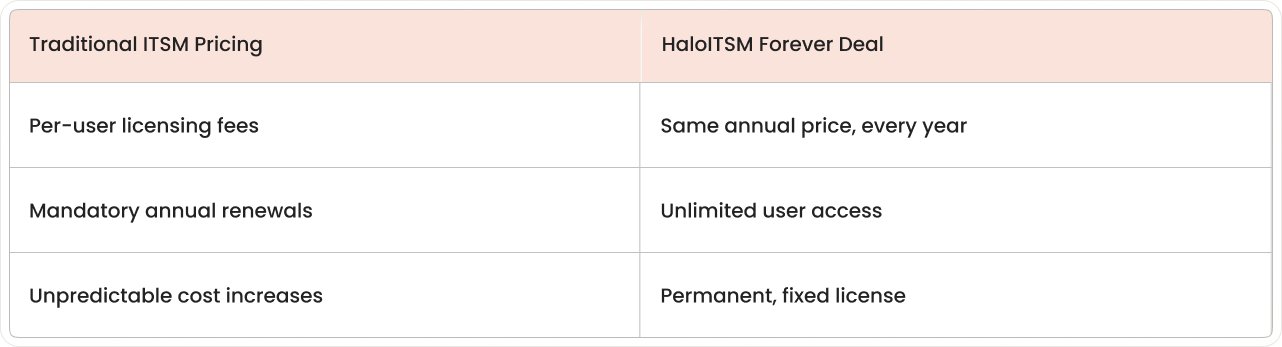
Here's what it actually means: You pay $1 million annually.
That price stays locked forever.
Same price. Every year. No increases. No surprises.
This fixed-rate enterprise service management contract fundamentally challenges the status quo. Instead of the traditional per-user model that punishes growth, you pay the same annual fee year after year.In this article, we'll break down exactly what the offer includes, who qualifies, how it compares to traditional ITSM pricing, and what implementation looks like.
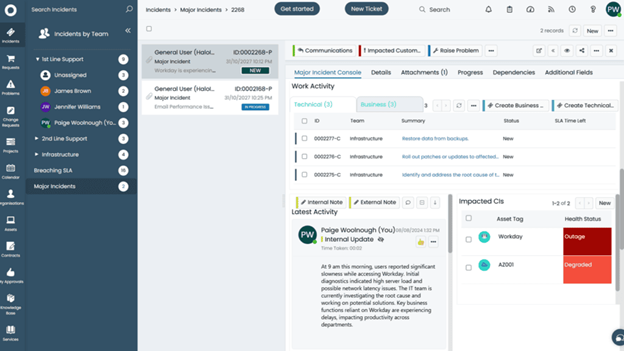
$1M Forever: Halo's Enterprise Revolution is exclusively available to organizations with over 20,000 employees or more than 1,000 service agents.
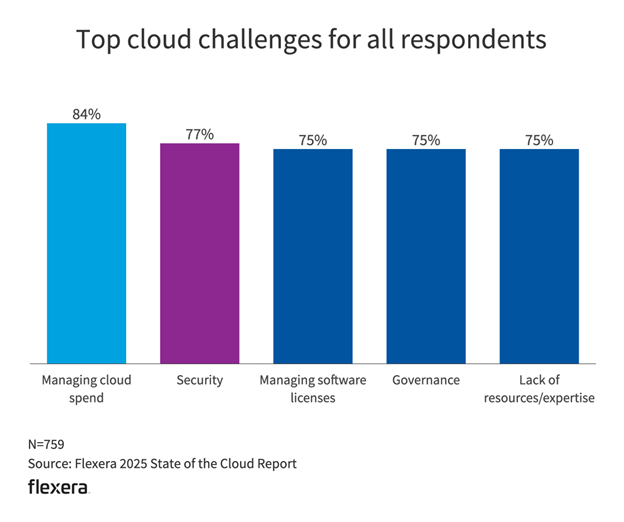
According to the Flexera 2024 State of the Cloud Report, 82% of organizations name managing cloud spend as their top challenge, a problem that directly fuels budget unpredictability.
Ever feel like your ITSM budget is that friend who "forgets" their wallet?

You think you've got the bill covered. Then surprise fees show up uninvited.
User overages crash the party.
Halo's $1M Forever deal gives you the menu price upfront. You pay $1M annually. That number never changes.
Key Takeaways
HaloITSM's $1M Forever deal offers unlimited users, unlimited instances, and all future updates for a fixed annual fee of $1 million, with no price increases, exclusively available to organizations with 20,000+ employees or 1,000+ service agents.
The fixed-rate model can save enterprises $6-17 million over five years compared to traditional per-user ITSM platforms like ServiceNow, which typically cost $100-300 per user annually, plus hidden fees that add 40-60% to stated license prices.
The deal includes comprehensive ITSM and ESM capabilities, spanning incident management, service catalog, asset management, HR service management, facilities management, and AI-powered automation features, all without additional module licensing fees.
Implementation follows a structured 3-6 month process with all professional services, data migration assistance, and enterprise-level support included in the annual fee, eliminating the typical $200K-500K implementation costs.
What the $1M Forever Offer Actually Includes
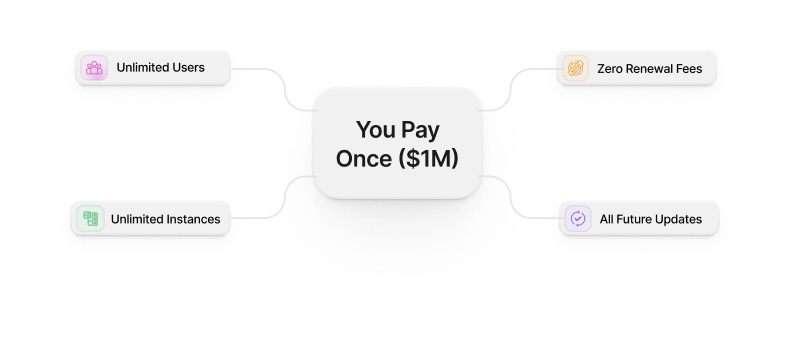
The HaloITSM $1M Forever offer includes unlimited users, unlimited instances, all future updates, and enterprise-level support.
All for a fixed $1 million annually that never increases.
No per-user fees.
No renewal surprises.
The core deal:
Annual cost: $1 million, locked in permanently.
User limits: Unlimited across your entire organization.
Instances: Unlimited production, testing, and development environments.
Updates: All future feature releases included.
Price guarantee: Never increases.
According to the Flexera 2024 State of ITAM Report, organizations estimate that 32% of their software spend is wasted.
Compare that to traditional ITSM platforms like ServiceNow or BMC. They charge you per user annually, usually starting around $100-200 per user per year. That's just licenses. On top of that, you have admin overheads, onboarding, and optimization costs.
What "forever" actually means for you:
Price lock: $1M annually with no hidden fees, upsells, or increases.
Fast deployment: Enterprise-scale service management in record time.
Custom configurations: Bespoke integration and security setups.
Product influence: Direct input on Halo's innovation priorities.
Migration funding: Innovation Grant to ease transition costs.

Ready to see how smooth your HaloITSM implementation can be?
Book a free strategy call today and let's map out your path to success.
Why Halo Created This Fixed-Rate Model
Rising ITSM costs have become more than a pain point; they're a strategic barrier. We see IT leaders wrestling with this reality every day in our consulting work.
Gartner research shows enterprise software spending grew 13.8% in 2024.
Four reasons Halo introduced fixed-rate licensing:
Budget predictability: Your CFO wants stable IT costs, and multi-year planning demands it. Traditional ITSM vendors make this nearly impossible with annual price increases and complex tier structures.
Growth flexibility: You shouldn't have to choose between expanding your team and managing software costs. That's a false choice that limits organizational agility.
Vendor lock-in concerns: Fixed-rate pricing fundamentally reduces the leverage vendors have during renewals. You're not trapped in a cycle of escalating costs with limited alternatives.
Competitive differentiation: Halo positions itself as the alternative to traditional per-user models and annual price increases. In our experience, that positioning resonates with enterprise buyers who are tired of the status quo.
Let's put this in perspective.
ServiceNow typically costs $100-300 per user annually depending on which modules you need. For an organization with 1000 service agents, that's $1.2M to $3.6 million in year one. Those costs increase with every new hire and every renewal cycle.
Forrester's Total Economic Impact studies consistently show that hidden costs add 40-60% to the stated license price of enterprise ITSM platforms.
Complete ITSM and ESM Capabilities Included
Halo's $1M Forever deal gives you comprehensive capabilities that we typically see fragmented across multiple vendors and license tiers.
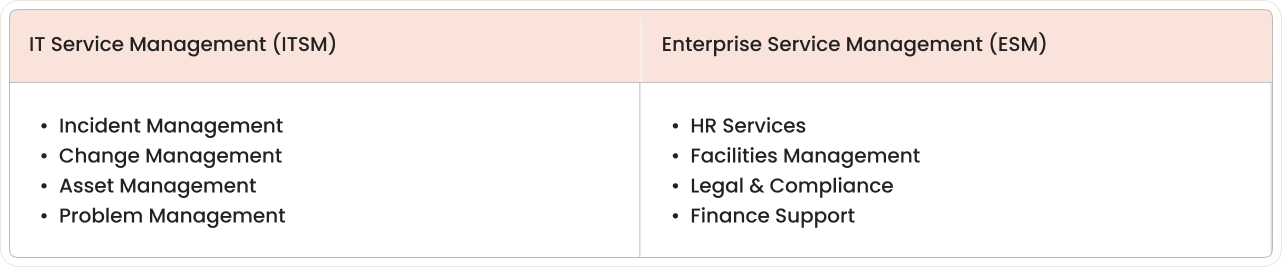
Core ITSM modules you'll get:
Incident management: Centralized ticket tracking with automated routing and SLA monitoring.
Service catalog: Self-service portal for common requests like software access and equipment.
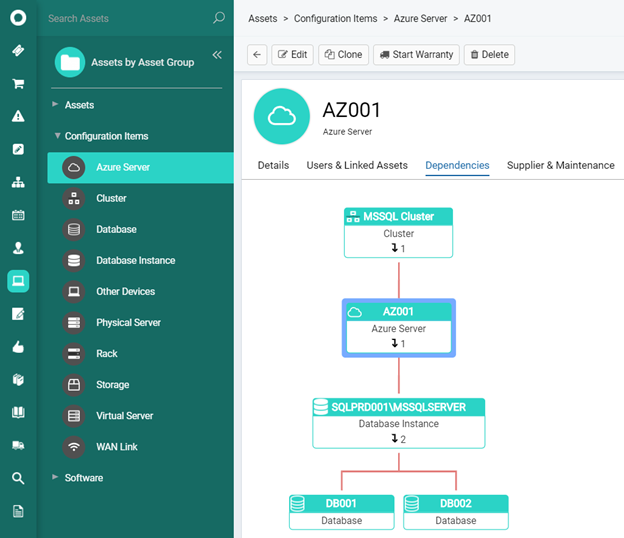
Asset management: Hardware and software inventory with built-in lifecycle tracking.
Change management: Structured approval workflows to keep system modifications controlled.
Problem management: Root cause analysis tools to prevent recurring incidents.
Enterprise service management extensions:
HR service management: Employee onboarding, leave requests, and HR ticket handling.
Facilities management: Building maintenance, desk booking, and equipment requests.
Legal and compliance: Contract requests and regulatory workflow management.
Finance support: Purchase approvals and expense-related service requests.
According to HDI's 2024 Support Center Practices Report, organizations with self-service portals see 35% fewer tier-1 tickets and 28% faster resolution times.
Professional services bundled in:
Data migration assistance
System setup and configuration
User training programs
Unlimited development, testing, and production environments
In our implementation work, we've seen these "extras" add 40-60% to the total cost of traditional ITSM deployments. Halo eliminates that uncertainty entirely.
AI and automation features:
Automated ticket routing: Machine learning assigns tickets to the right teams based on historical patterns.
Predictive analytics: Early warning systems catch potential service disruptions before they impact users.
Workflow automation: No-code tools let you build approval processes without developer resources.
Knowledge management: AI-powered suggestions for common issues that improve with usage.
If you think, this is just about price, you are gravely mistaken. Read why smart enterprises are switching to Halo over Servicenow
Who Qualifies for the $1M Forever Deal
The HaloITSM $1M Forever offer targets large enterprises with complex service management needs. Not every organization qualifies. Halo limits availability to maintain service quality during implementations.
Qualification requirements:
Organization size: Over 20,000 employees or more than 1,000 service agents.
Current ITSM spending: Already investing $1.5M+ annually on ITSM.
Multi-department scope: Planning to use ITSM beyond just IT (HR, facilities, legal, finance).
Contract timing: Preference for organizations with expiring ITSM contracts or major refresh cycles.
McKinsey research shows that 45% of large-scale software implementations exceed their original timeline by more than six months, primarily due to underestimated integration complexity.
Why Halo limits availability:
Implementation capacity: Each migration requires dedicated professional services resources.
Quality assurance: Limiting numbers allows more focused customer success support during the critical first 90 days.
Revenue model sustainability: Fixed-rate pricing requires careful customer selection to maintain profitability.
If you're interested in the offer, expect a 4-6 week evaluation process. This includes technical assessments, contract negotiations, and final approval.
Cost Comparison: Halo vs Traditional ITSM
HaloITSM's $1M Forever deal can save enterprises $6–17M over five years compared to ServiceNow or BMC. The economics become more compelling as your organization scales.
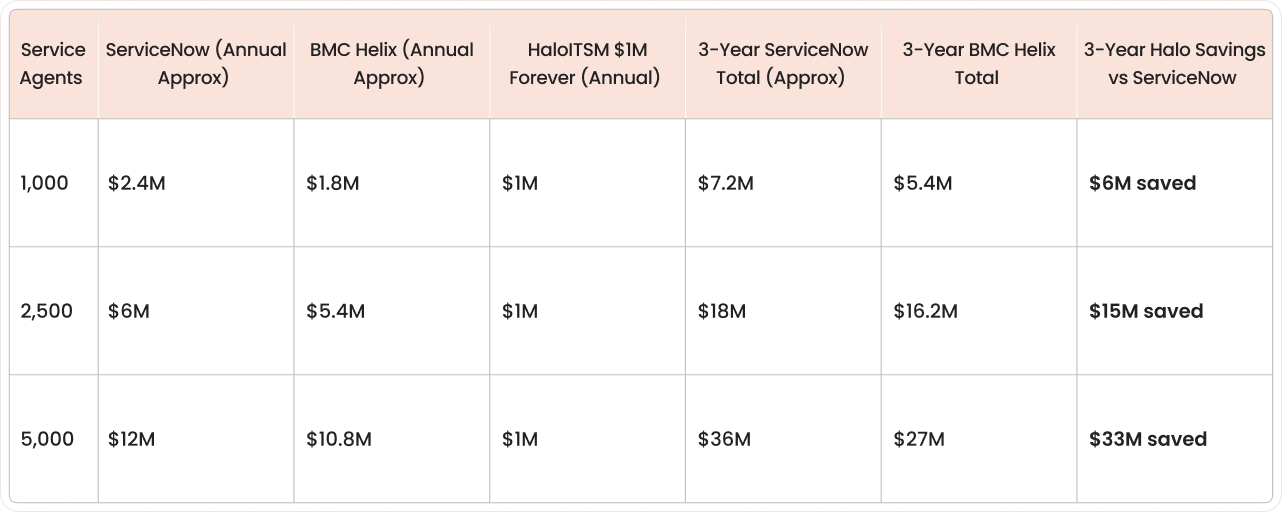
ServiceNow and BMC require dedicated in-house expertise. A ServiceNow architect typically costs $140,000-190,000 annually, and that's just one role. You'll need multiple specialists for enterprise deployments.
Legal disclaimer: ServiceNow and BMC pricing varies significantly based on modules, support tiers, and contract negotiations. These figures represent typical enterprise deployments observed in our consulting work. Your actual costs may differ. Always verify pricing directly with vendors.
Nucleus Research's 2024 Technology Value Matrix found that organizations spend an average of $147 per user annually on ITSM platforms, with enterprise deployments averaging $215 per user when all costs are included.
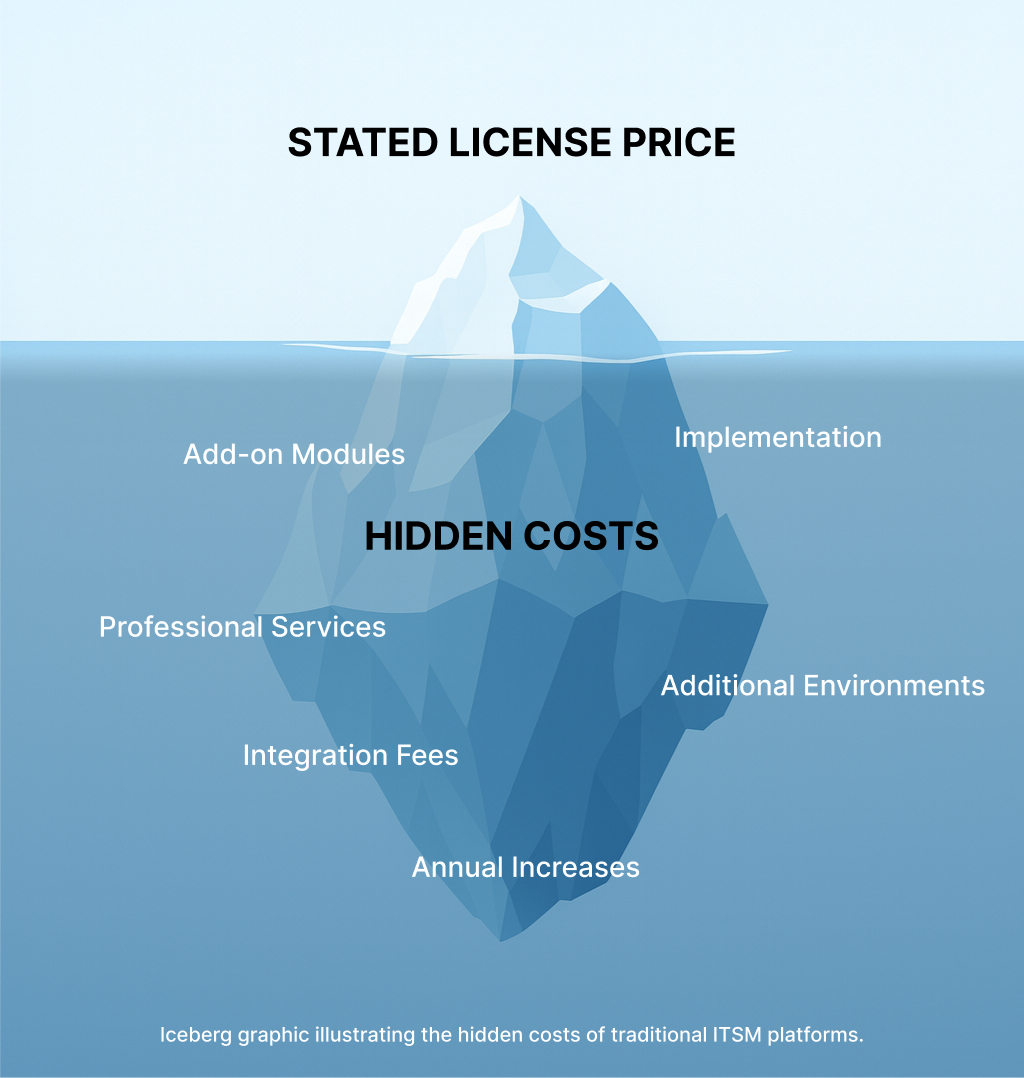
Hidden costs in traditional ITSM:
Professional services: Implementation typically costs 50-100% of your first-year licensing.
Additional environments: Dev/test instances often cost 25-50% of production licensing.
Module add-ons: HR, facilities, and advanced analytics frequently require separate licenses.
Annual increases: Expect 10-30% price hikes at renewal.
Integration fees: API access and custom connectors may incur additional charges.
Premium support: 24/7 support requires additional annual fees.
Implementation Process: 3 Phases to Success
Moving from your legacy ITSM platform to Halo follows a structured approach that we've refined through dozens of enterprise migrations.
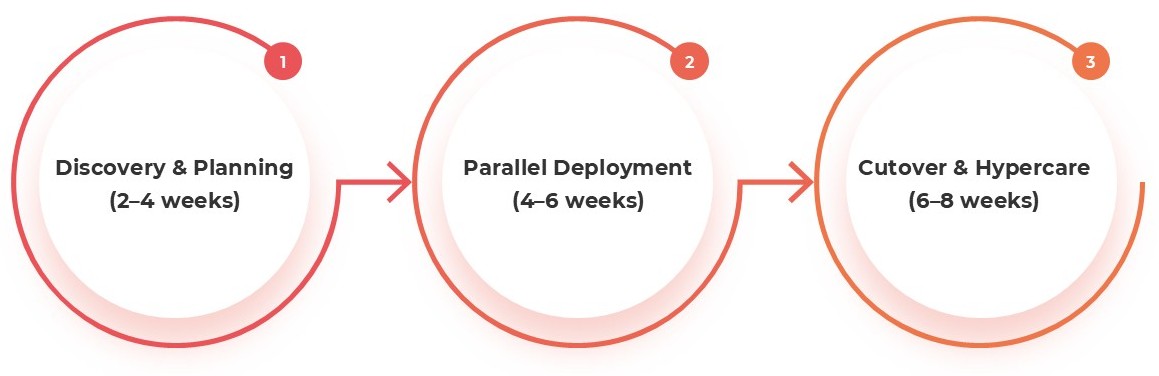
Phase 1: Discovery and planning (2-4 weeks)
Current system assessment and data mapping
Integration requirements analysis
Custom workflow documentation
Migration timeline development
Phase 2: Parallel deployment (4-6 weeks)
HaloITSM configuration and testing
Data migration in controlled batches
User acceptance testing with key stakeholders
Integration setup and validation
Phase 3: Cutover and hypercare (6-8 weeks)
Final data sync and system switchover
Intensive monitoring and issue resolution
User training and documentation updates
Process optimization based on initial usage
Most Halo implementations are complete within 3-6 months. For a detailed breakdown, read our HaloITSM implementation guide.
The $1M Forever deal includes all professional services. A significant advantage we've seen save clients $200K-500K.
PMI's Project Management Institute reports that phased migration approaches reduce implementation risk by 34% compared to "big bang" cutovers.
Common migration challenges:
Data quality issues: Legacy systems often contain incomplete or inconsistent records.
Process standardization: Multiple departments may have different approval workflows that need reconciling.
User adoption: Change management becomes critical for successful transitions.
Integration complexity: Connecting to existing tools takes careful planning and execution
7. Expected ROI and Payback Timeline
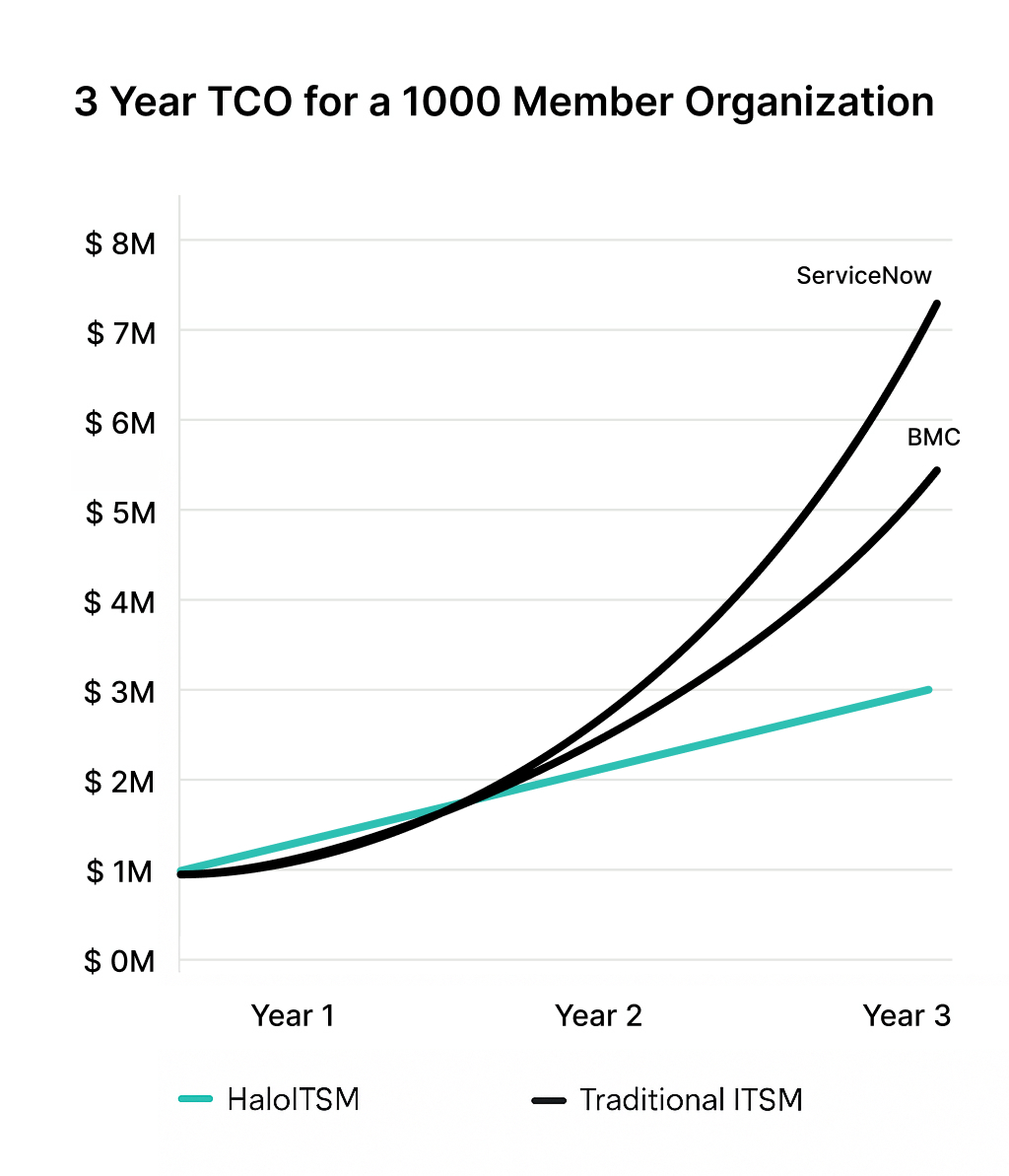
When evaluating the HaloITSM $1M Forever deal, look at total cost of ownership over 3-5 years.
Year 1 cost comparison for a 2,500-agent organization:
Traditional ITSM (ServiceNow): ~$3.5M (licensing + implementation)
HaloITSM $1M Forever: $1M (all-inclusive)
Year 1 savings: $2.5M
Years 2-5 cumulative comparison:
Traditional ITSM: $7-18M additional (annual licenses + increases)
HaloITSM: $4M total ($1M annually, no increases)
5-year savings: $6-17M
Forrester's Total Economic Impact framework shows that organizations implementing modern ITSM platforms achieve an average ROI of 245% over three years, with payback periods of 8-14 months.
Productivity gains you can expect:
Faster ticket resolution: We typically see 20-30% improvement in resolution times.
Self-service adoption: Automated catalog fulfillment reduces agent workload by 25-40%.
Improved SLA performance: Better workflow management translates to fewer SLA breaches.
Industry benchmarks indicate that organizations with mature ITSM implementations resolve incidents 42% faster and reduce mean time to resolution (MTTR) by an average of 3.2 hours.
Risk reduction benefits:
Budget predictability: Fixed annual costs eliminate surprise renewals and price increase shocks.
Vendor independence: Locked-in pricing fundamentally reduces negotiation leverage concerns.
Compliance consistency: Standardized processes reduce audit risk and improve regulatory compliance
Governance Strategies for Unlimited Licensing
Unlimited user access requires thoughtful governance—something we emphasize strongly with our clients. Without proper governance, unlimited licensing can become unlimited chaos.
Access control best practices:
Role-based permissions: Define clear access levels based on job functions. Start restrictive and expand as needed.
Department segmentation: Separate workflows and data visibility between business units.
Regular access reviews: Quarterly audits to remove inactive users and update permissions.
Approval workflows: Structured processes for granting elevated privileges and sensitive data access.
SANS Institute research shows that organizations implementing least-privilege access controls reduce security incidents by 58% and improve audit compliance by 67%.
Usage monitoring approaches:
Department chargeback models: Track ticket volume and resource consumption by business unit.
Performance metrics: Monitor SLA compliance and resolution times across different service types.
Adoption tracking: Identify underutilized features and departments needing additional training.
Capacity planning: Use usage trends to predict infrastructure and support needs
Accelerate Your ITSM Transformation with saasgenie
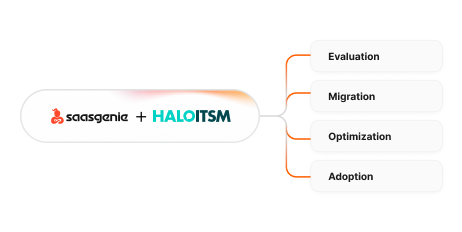
Choosing the right ITSM platform is just the beginning. Successful implementation requires deep expertise in data migration, process optimization, and change management.
As certified Halo partners, we've guided dozens of organizations through complex ITSM transformations. From legacy system migrations to modern service management implementations.
Our ITSM transformation services:
Platform evaluation: Independent assessment of ITSM options based on your specific requirements.
Migration planning: Detailed roadmaps for moving from legacy systems with minimal disruption.
Process optimization: Workflow design that balances standardization with departmental needs.
Change management: User adoption strategies that ensure your investment delivers results.
Ready to explore your ITSM options?
Schedule a consultation to discuss your current challenges and transformation goals.