




How AI is Transforming Customer Engagement in Modern Contact Centers
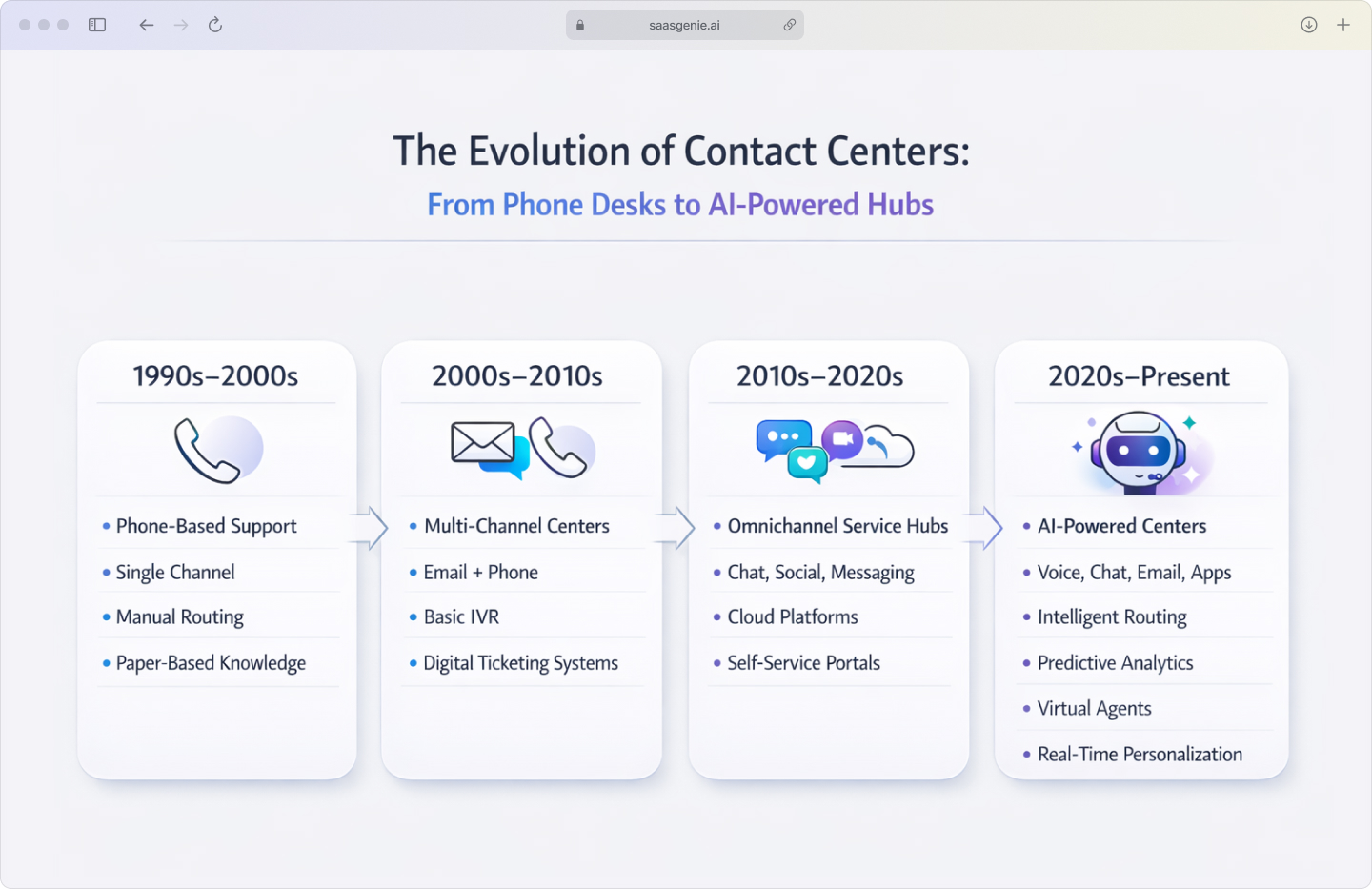
Contact centers have evolved from phone-based support desks into digital service hubs. Customers now reach businesses through voice, chat, email, messaging apps, and self-service portals.
At the same time, customer expectations have shifted. People expect quick answers, clear updates, and service that remembers earlier conversations.
Artificial intelligence in contact center operations is now part of that shift. It helps contact centers sort requests, understand language, guide agents, and respond faster across channels.
Many teams exploring the future of customer engagement with contact center AI technology are trying to answer a basic question first: what is AI actually doing inside a contact center?
That's the starting point for the rest of this article.
What is AI in contact centers, and why does it matter?
AI call centers use software that learns from data, recognizes patterns, understands language, and supports decisions during customer conversations. In simple terms, it helps contact center systems do parts of the work that once depended only on human agents.
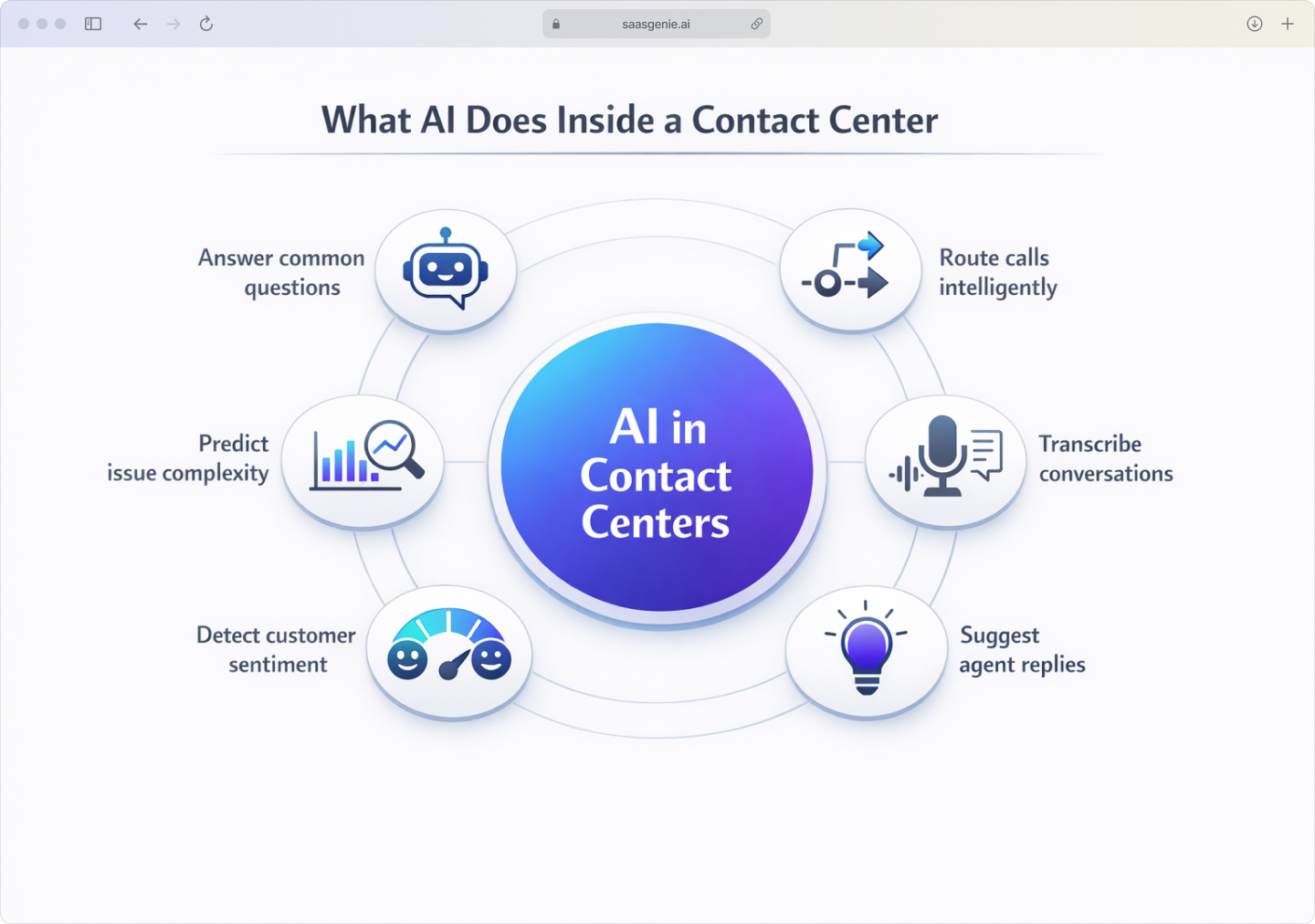
This includes chatbots answering common questions, systems routing calls to the right team, tools transcribing conversations, and software suggesting the next reply to an agent. Some AI tools also detect customer sentiment, summarize cases, and predict which issues may take longer to solve.
AI in contact centers isn't one single tool. It's a collection of technologies that work together across customer service operations, machine learning, natural language processing, speech recognition, and automation.
This shift is happening now because contact centers handle more channels, more data, and higher customer expectations than in the past, driving the call center AI market to USD 2.98 billion in 2026. A single customer interaction may start in chat, move to email, and end on a phone call, creating more complexity for both agents and systems.
How AI call center technology works
Modern AI call center systems combine language tools, data analysis, and workflow automation. Each part handles a different job during a customer interaction.
Core technologies include:
- Natural language processing (NLP): Software that reads or hears human language and turns it into structured meaning.
- Speech recognition: Software that converts spoken words into text during phone calls.
- Machine learning: Models that learn patterns from past conversations, tickets, and outcomes.
- Generative AI: Models that create new text based on context instead of selecting only from fixed scripts.
- Predictive analytics: Systems that estimate likely outcomes by studying patterns in historical data.
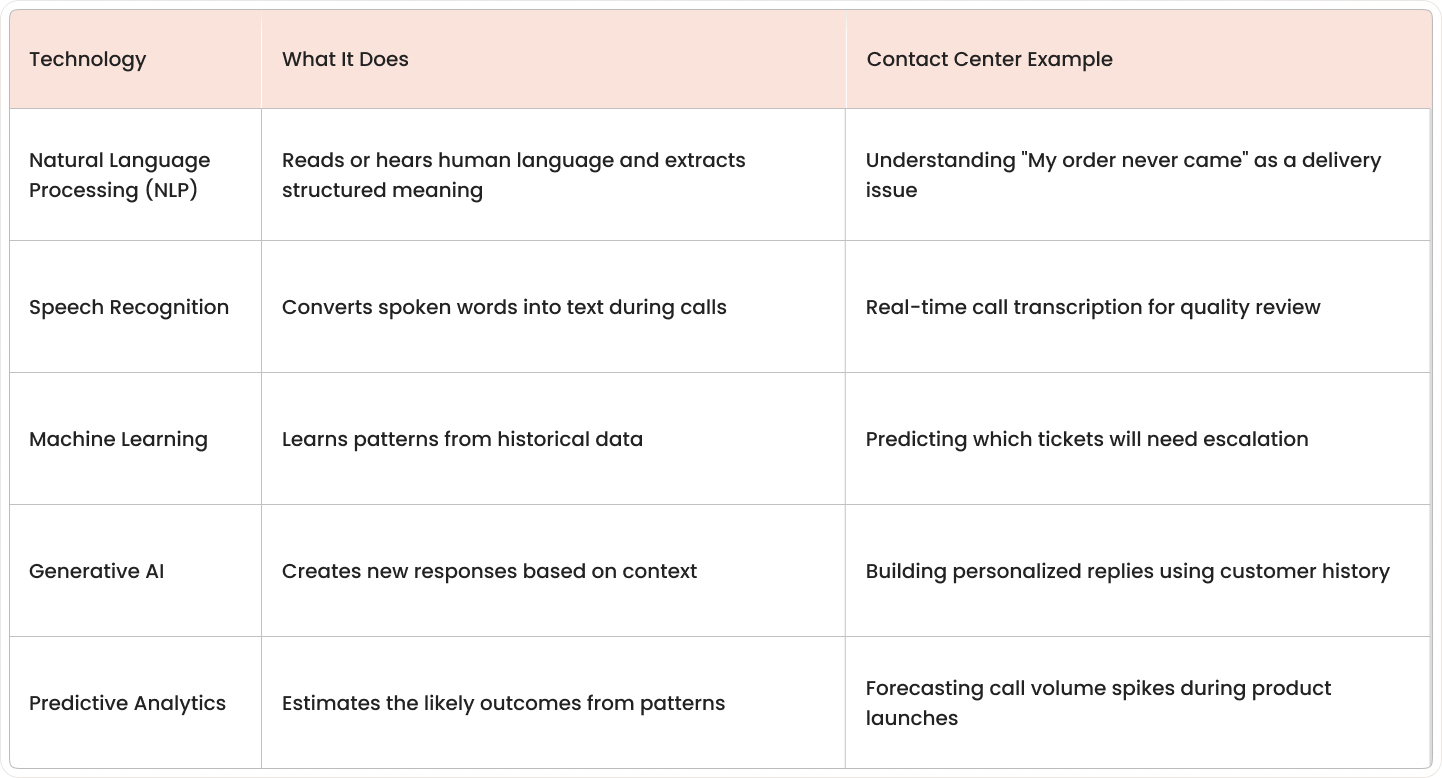
Virtual agents use NLP to understand intent, the goal behind the words. A message like "My order never came" gets understood as a delivery issue even if the customer doesn't use formal support language.
Generative AI creates new responses based on the live conversation, customer history, and knowledge sources connected to the platform, functioning as intelligent agents that analyze and respond to customer needs. Instead of matching a question to a stored answer, a generative model builds a response word by word using patterns learned from large amounts of language data.
Why AI and human agents deliver better results together
A common concern in contact centers is that AI will replace human agents. In practice, most modern contact centers use AI and human agents working together for different parts of the same customer journey.
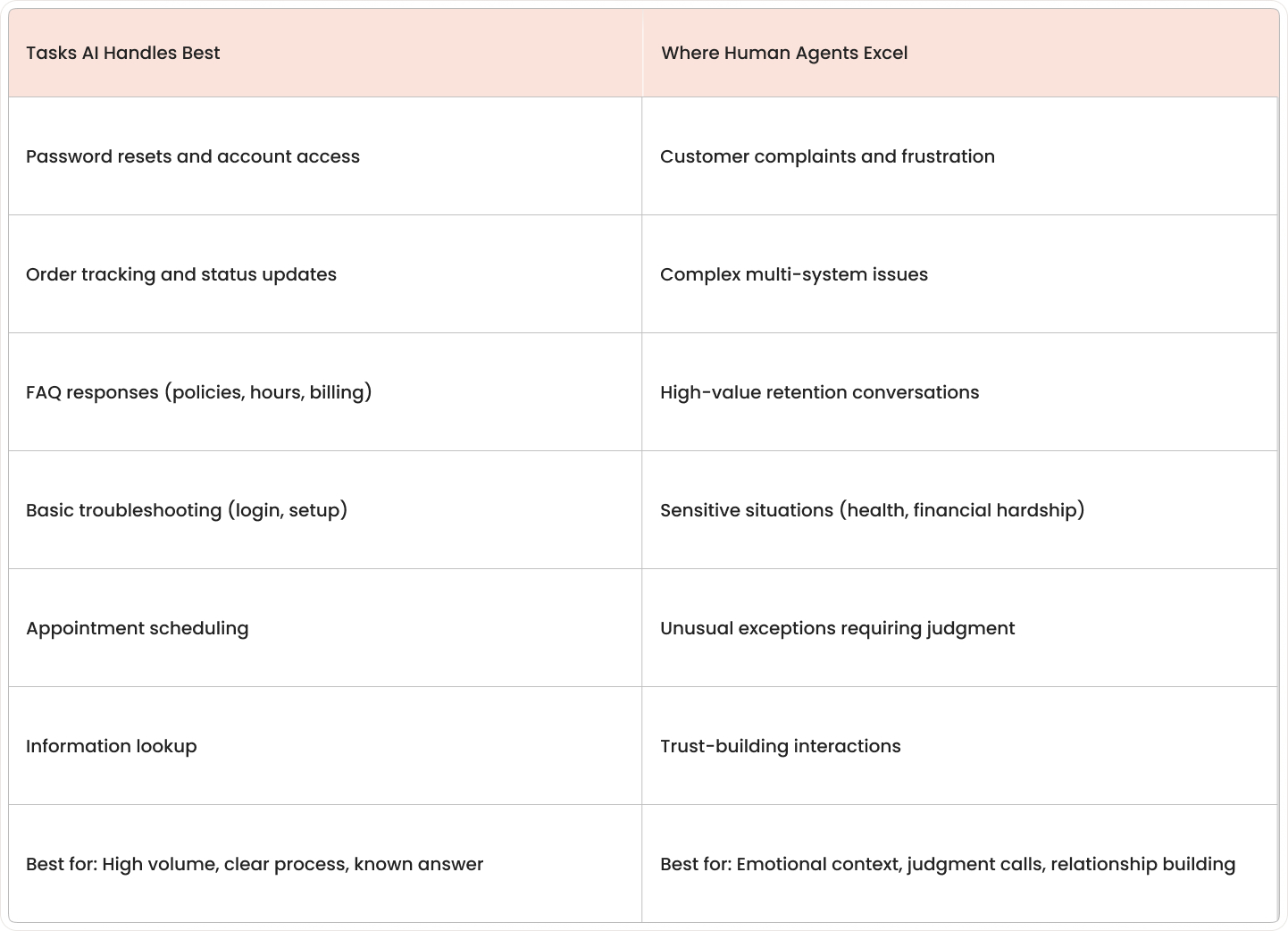
AI handles speed, repetition, and pattern-based tasks well. Human agents excel at judgment, emotional context, and conversations where trust matters.
Tasks AI handles best
AI performs well when the request is common, follows a known process, and has a clear answer:
- Password resets: Identity checks, reset links, and guided account access steps.
- Order tracking: Shipment status, delivery estimates, and tracking updates.
- FAQ responses: Return policies, store hours, billing dates, and account instructions.
- Basic troubleshooting: Step-by-step support for simple login, setup, or connectivity issues.
Where human empathy still wins
Some situations depend on tone, patience, and careful judgment:
- Complaints: Cases where frustration, disappointment, or anger shape the conversation.
- Complex issues: Problems involving multiple systems, unclear causes, or unusual exceptions.
- High-value customer retention: Conversations where relationship history and business impact matter.
- Sensitive situations: Health, financial hardship, bereavement, privacy concerns, or service failures with serious consequences.
Key benefits of AI for customer engagement and operations
When AI gets added to contact center work, the main changes appear in speed, consistency, workload management, and service quality.
Faster Resolution and Round-the-Clock Availability
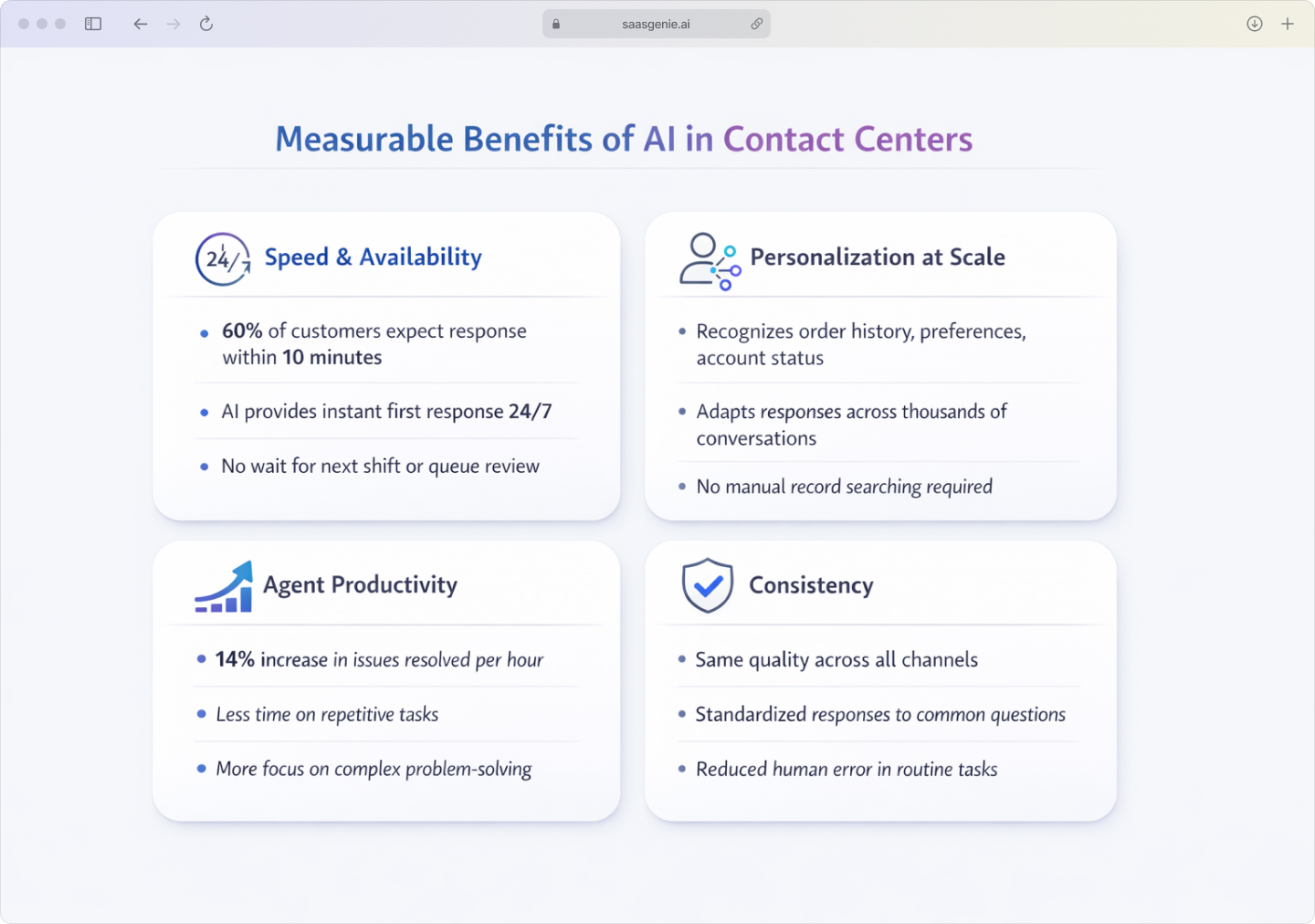
AI can respond as soon as a customer starts an interaction. This reduces the delay that often happens when customers wait for a live agent, queue review, or business-hour callback, addressing the fact that 60% of customers define immediate response as 10 minutes or less.
In a modern contact center, AI tools can handle first responses at any time of day. A customer asking a basic account question late at night can still receive help without waiting for the next shift to begin.
Personalized Experiences at Scale
AI can use existing customer data during an interaction without requiring an agent to search manually through multiple records. This allows a system to recognize previous orders, support history, language preferences, product usage, and account status in real time.
The same system can adapt greetings, responses, recommendations, and follow-up steps across thousands of conversations simultaneously.
Improved Agent Productivity and Job Satisfaction
AI changes how agents spend time during the workday. Instead of handling a long stream of repetitive tasks, agents can spend more time on cases that involve explanation, judgment, and problem-solving.
This affects both efficiency and job experience, with organizations seeing 14% increase in issue resolution per hour when implementing AI assistance. Work becomes more focused on meaningful interactions and less focused on copy-paste replies, tagging, note-taking, and repeated status checks.
What the customer contact center of the future looks like
The customer contact center of the future is becoming a coordination system rather than a single support channel. AI is moving service work toward earlier detection, more precise personalization, and smoother movement between channels.
From Reactive Support to Proactive Engagement
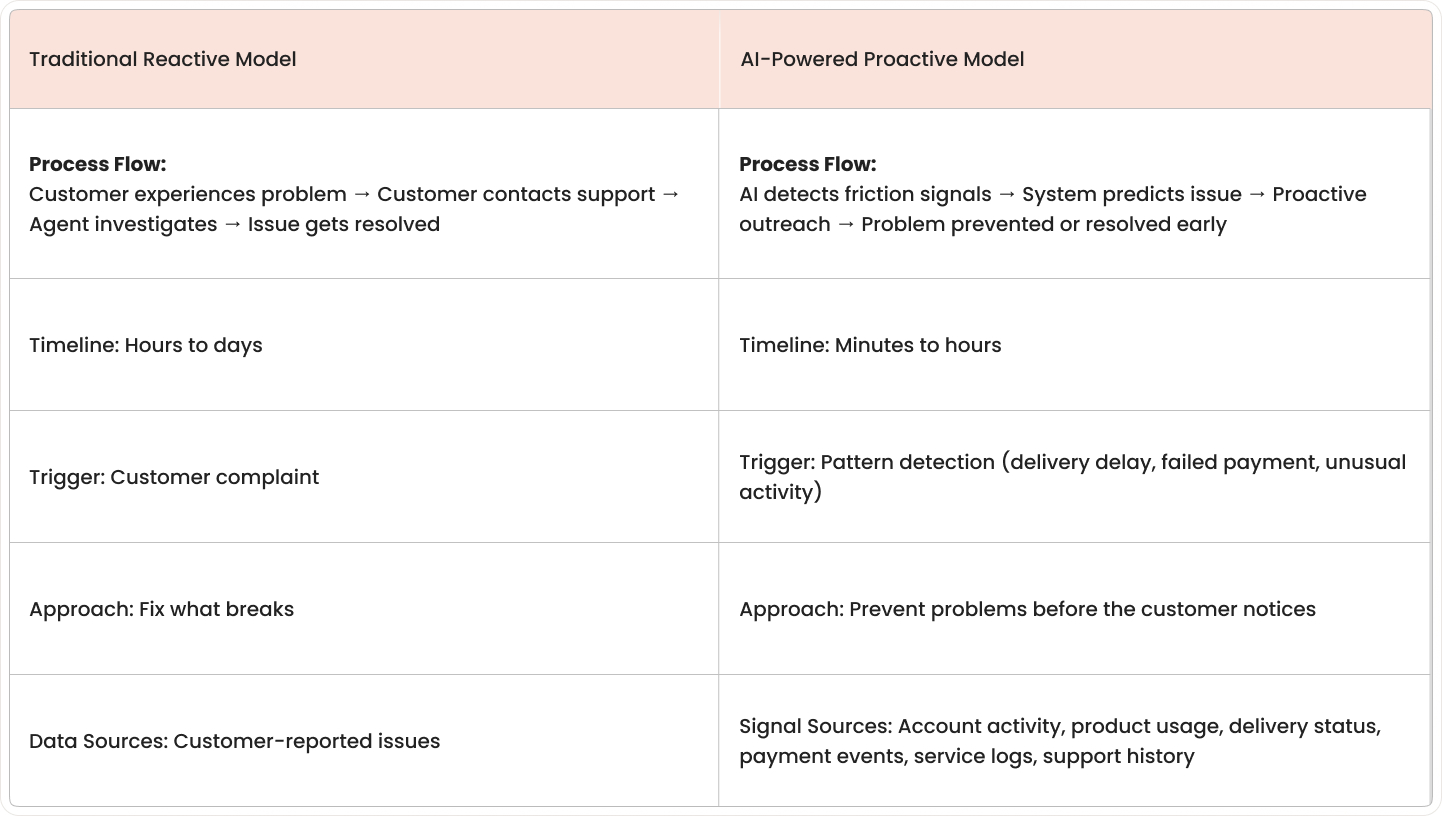
Older contact center models started after a customer reported a problem. Future models begin earlier, by tracking signals that suggest friction, delay, confusion, or service risk.
Signals can come from account activity, product usage, delivery status, payment events, service logs, or prior support history. AI systems review such signals continuously and connect them to likely customer outcomes, enabling predictive engagement.
Hyper-Personalization Through AI
Future customer interactions are becoming more tailored because AI systems can combine many small pieces of context at once. Context can include account history, product ownership, channel preference, language, prior sentiment, service tier, and recent activity.
A first-time buyer and a long-term enterprise customer may receive different support flows for the same issue. A customer who prefers chat, reads short instructions, and has a history of mobile purchases may get guided differently from a customer who usually calls and asks for detailed explanations.
Common challenges when implementing AI in contact centers
Adding AI to a contact center changes systems, workflows, and daily work habits. Many problems come from setup details, not from the idea of AI itself.
Data Quality and System Integration
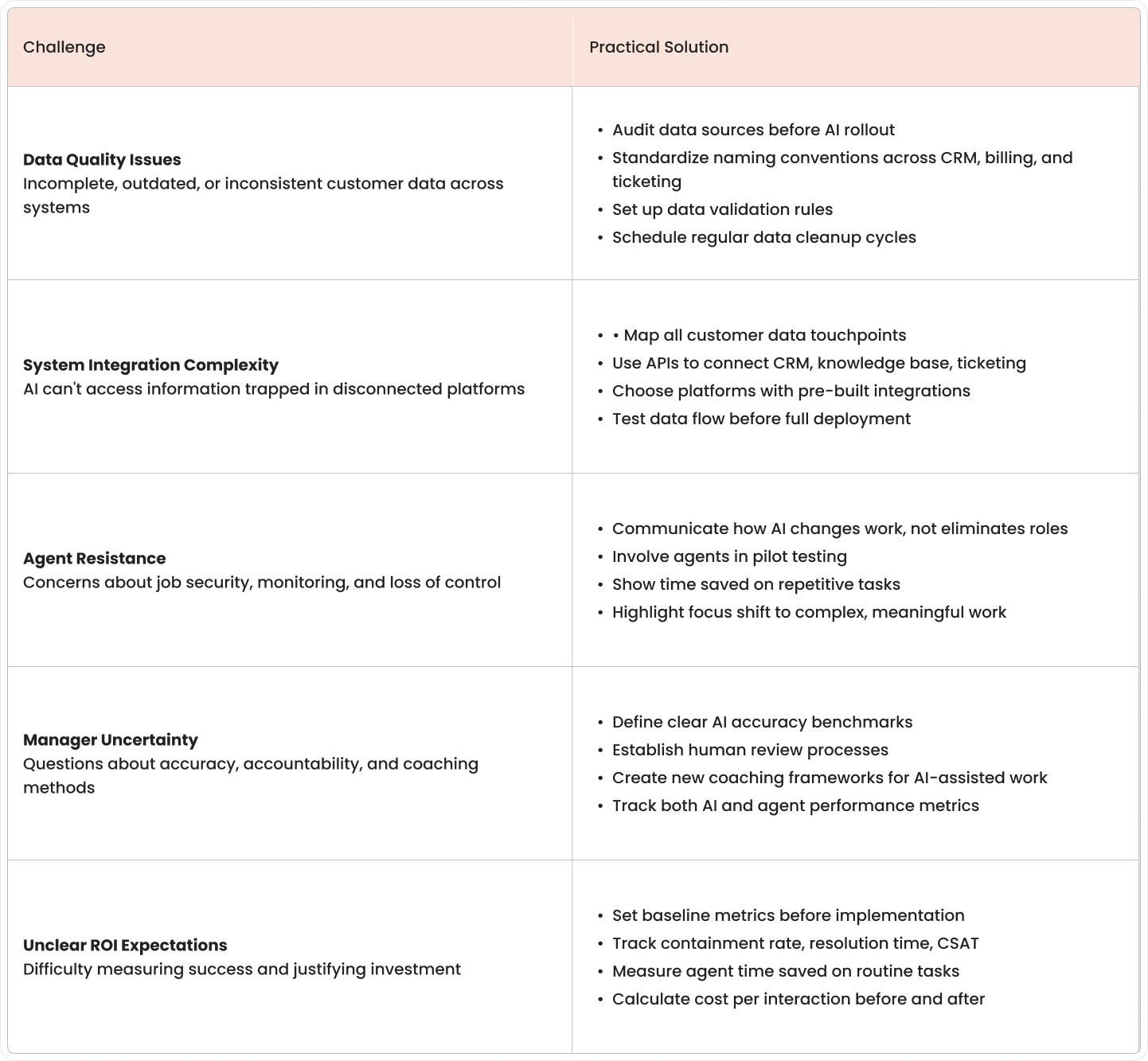
AI systems learn from data and act on the information they can access. When the source data is incomplete, outdated, duplicated, or inconsistent, the AI output becomes less reliable.
A contact center may store customer names one way in the CRM, another way in billing, and a third way in the ticketing system. Such a mismatch can cause routing errors, weak personalization, and inaccurate case summaries.
Change Management and Team Adoption
AI changes how agents work, how managers review performance, and how support teams define good service. Technical rollout is only one part of implementation.
Agents may worry about job security, heavier monitoring, or loss of control over customer conversations. Managers may worry about accuracy, accountability, and how to coach teams using AI-assisted workflows.
How to get started with AI in your contact center
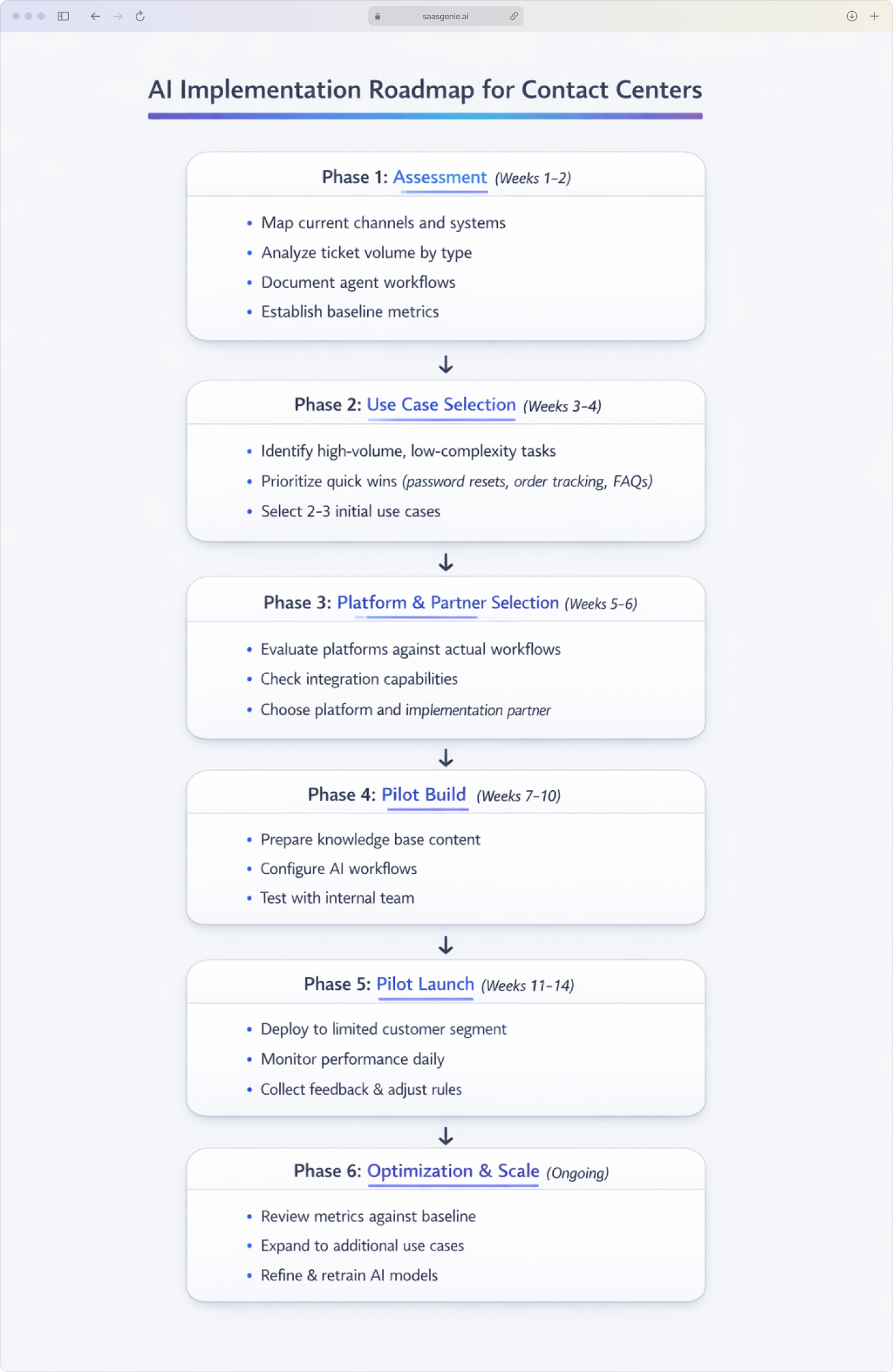
A practical starting point is a structured rollout plan, joining the 85% of customer service leaders exploring or piloting conversational AI solutions. Most contact centers begin with a small set of use cases, a clear baseline, and a review process that continues after launch.
Assess Your Current State and Define Goals
The first step is understanding how the contact center works today. That includes channels, systems, ticket volume, common request types, agent workflows, and reporting methods.
A baseline usually comes from existing service data, average response time, resolution time, transfer rate, repeat contact rate, self-service usage, and customer satisfaction scores.
Identify High-Impact Quick Wins
Early AI projects often work best when the task is common, clear, and repetitive. High-volume, low-complexity work creates a cleaner starting point because the process is easier to map and measure.
Examples of common starting points:
- Password and account access flows
- Order status questions
- FAQ handling in chat or portal
- Automatic case tagging
- Basic routing by topic or language
Select the Right Platform and Implementation Partner
Platform selection starts with fit, not feature count. An AI-enabled contact center platform is easier to evaluate when the review ties to actual workflows, channels, integrations, and reporting requirements.
Contact center automation workforce intelligence helps teams understand how labor gets assigned and supported during daily operations. AI studies queue size, agent skills, language coverage, case type, and service targets to help distribute work.
saasgenie works with organizations evaluating and implementing AI-enabled CX platforms, including Freshworks, Intercom, Zoom, and other tools with customer engagement and automation capabilities. The work typically includes platform assessment, implementation planning, integrations, workflow design, and ongoing optimization.

Ready to add AI to your contact center?
Most rollouts start with a platform review, workflow design, and pilot launch. Let's discuss your setup, data readiness, and next steps.